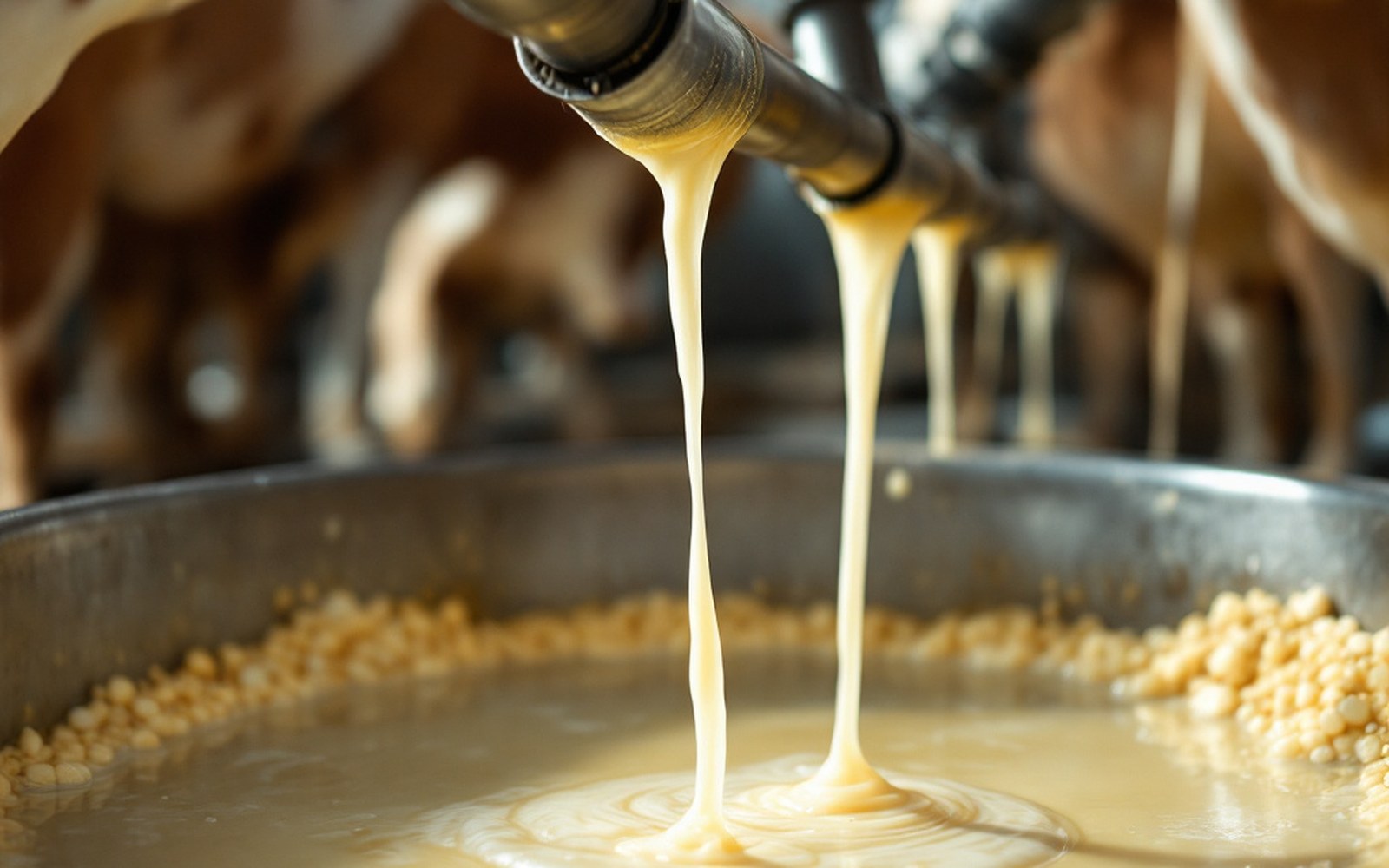
The liquid that stays
When milk coagulates and the cheesemaker cuts the caillé — the curd — and draws it into a mould, the bulk of what remains in the copper vat is petit-lait: whey. For a full-sized mountain wheel, that is far more liquid than cheese. The ratio is not flat, but as a rule the curd that becomes a wheel accounts for a small fraction of the milk's original volume, and whey claims the rest.
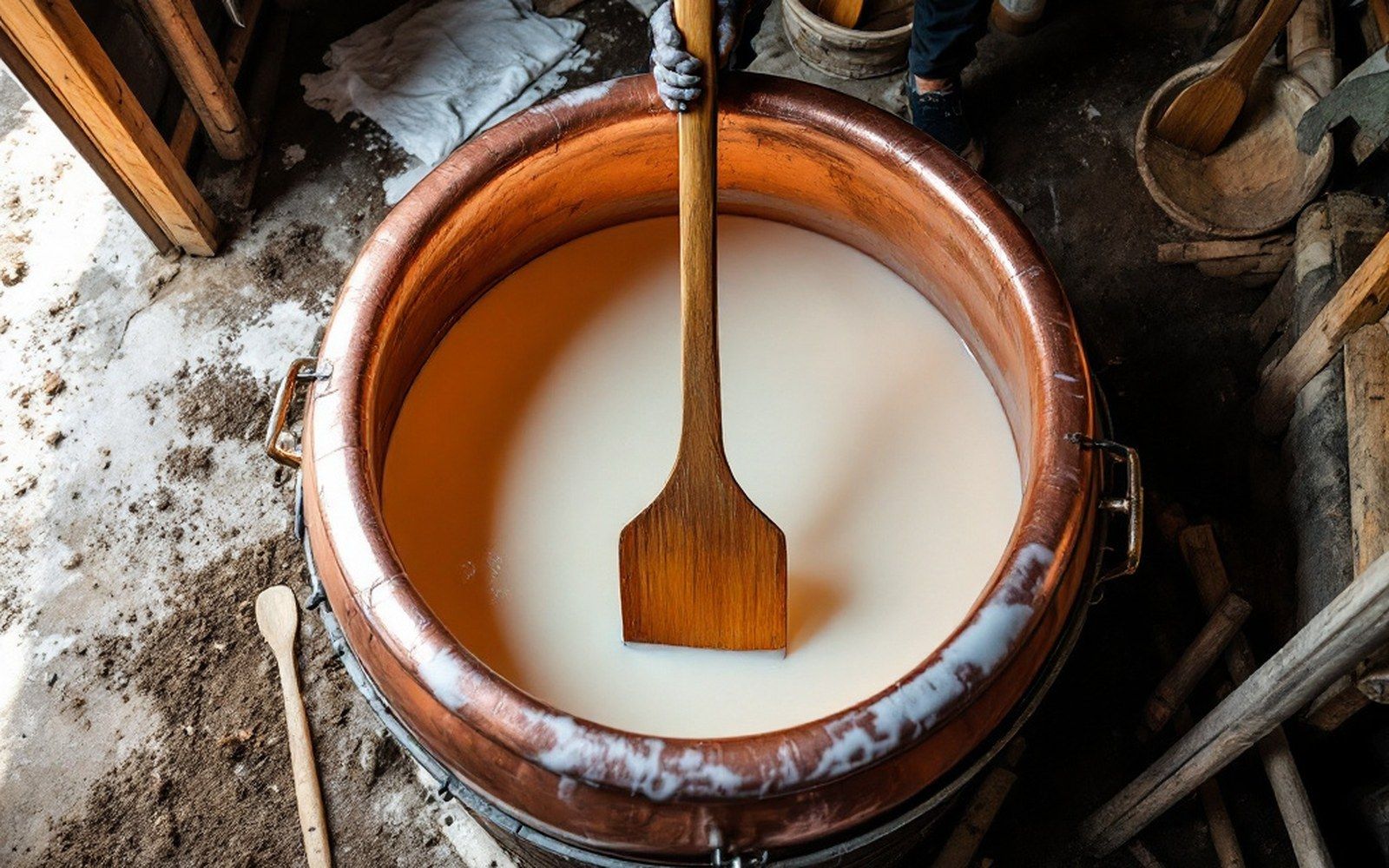
At the fruitière — the cooperative dairy where neighbours pooled their milk — this volume was never trivial. Pooled milk from multiple farms means pooled whey: vat after vat of warm, protein-bearing liquid that had to go somewhere before the next day's make.
How the volumes work
- Whey accounts for the majority of the original milk volume after the curd is drawn;the cheese is the smaller fraction.
- Whey spoils quicklyat ambient temperature, which is why proximity of dairy to pigsty was practical, not incidental
- A second heatingprecipitates residual proteins into a fresh whey cheese, separate from the main aged wheel
It went to pigs. The practice is older than any of the designations and is recorded in the earliest written accounts of Alpine fruitières. Whey is not nutritionally worthless: it carries residual lactose, soluble proteins and minerals that support animal growth, and research on whey's composition ↗ confirms why it became a reliable feed supplement rather than a by-product to discard. A cooperative that made cheese every morning generated enough whey to maintain a small herd of pigs with very little additional cost. The animals were often kept in a sty adjoining or close to the dairy building — a sensible arrangement when the liquid spoils quickly in warm weather and distance means waste.
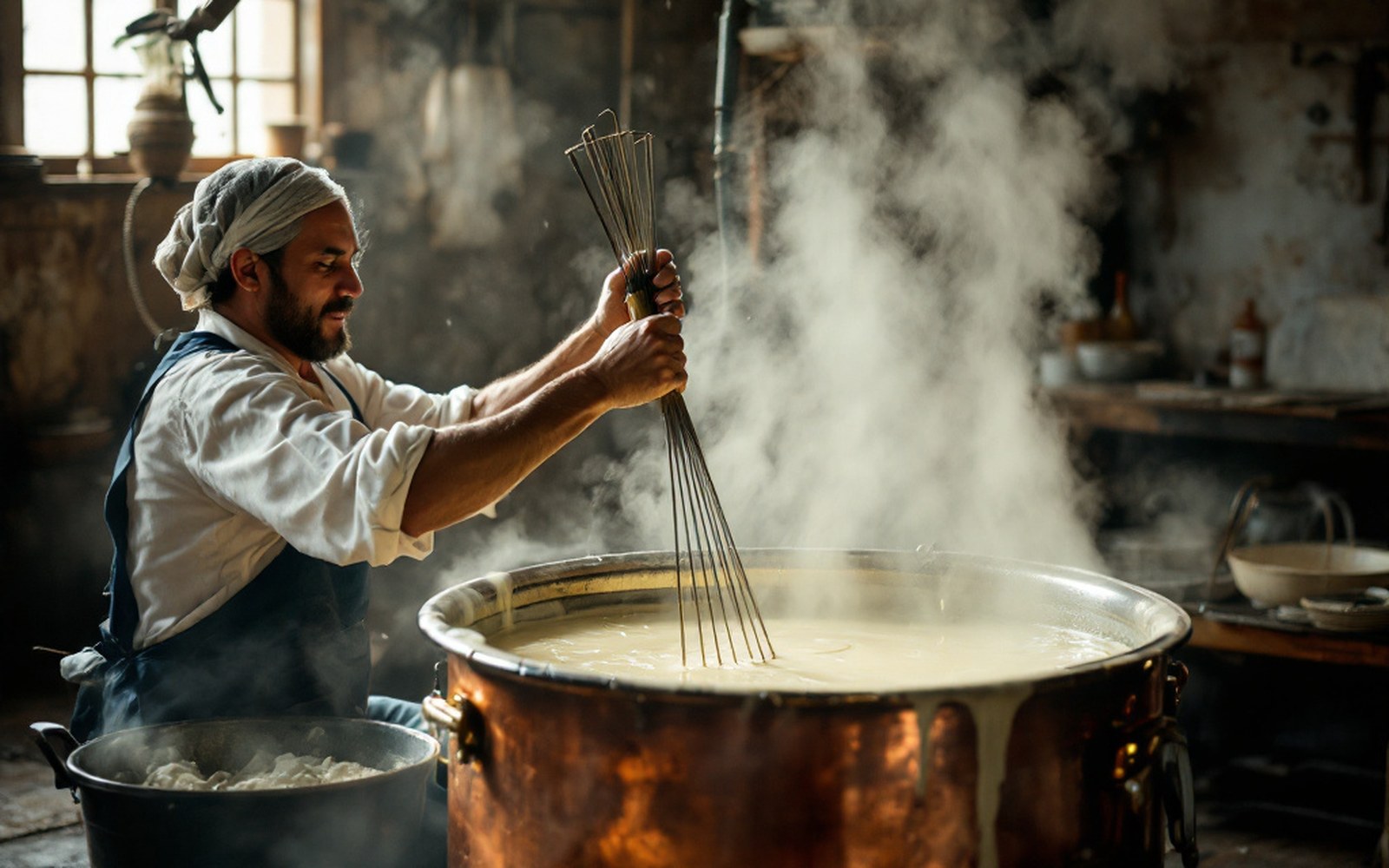
This dual economy — cheese and pork — is part of what made the fruitière a coherent rural institution rather than just a dairy. The cheesemaker's work produced two income streams under one roof. Communities in the Massif des Bauges and the valleys around Faverges followed the same logic: the Parc naturel régional du Massif des Bauges ↗ has documented this embedded livestock tradition as part of its pastoral heritage.
A cooperative that made cheese every morning generated enough whey to maintain a small herd of pigs with very little additional cost.
Whey can also be heated a second time to precipitate the remaining proteins and yield a small amount of fresh whey cheese — a product distinct from the aged wheel and consumed quickly. Modern industrial creameries process whey into powder, concentrate and supplement, but that economy of scale was never the fruitière's world. The village dairy's answer was simpler, and it has not entirely disappeared: some working alpine cooperatives still route whey to animals on the same holding, closing the loop the same way their predecessors did.
The vat empties. Nothing useful leaves the building.