A tax dodge that became a designation
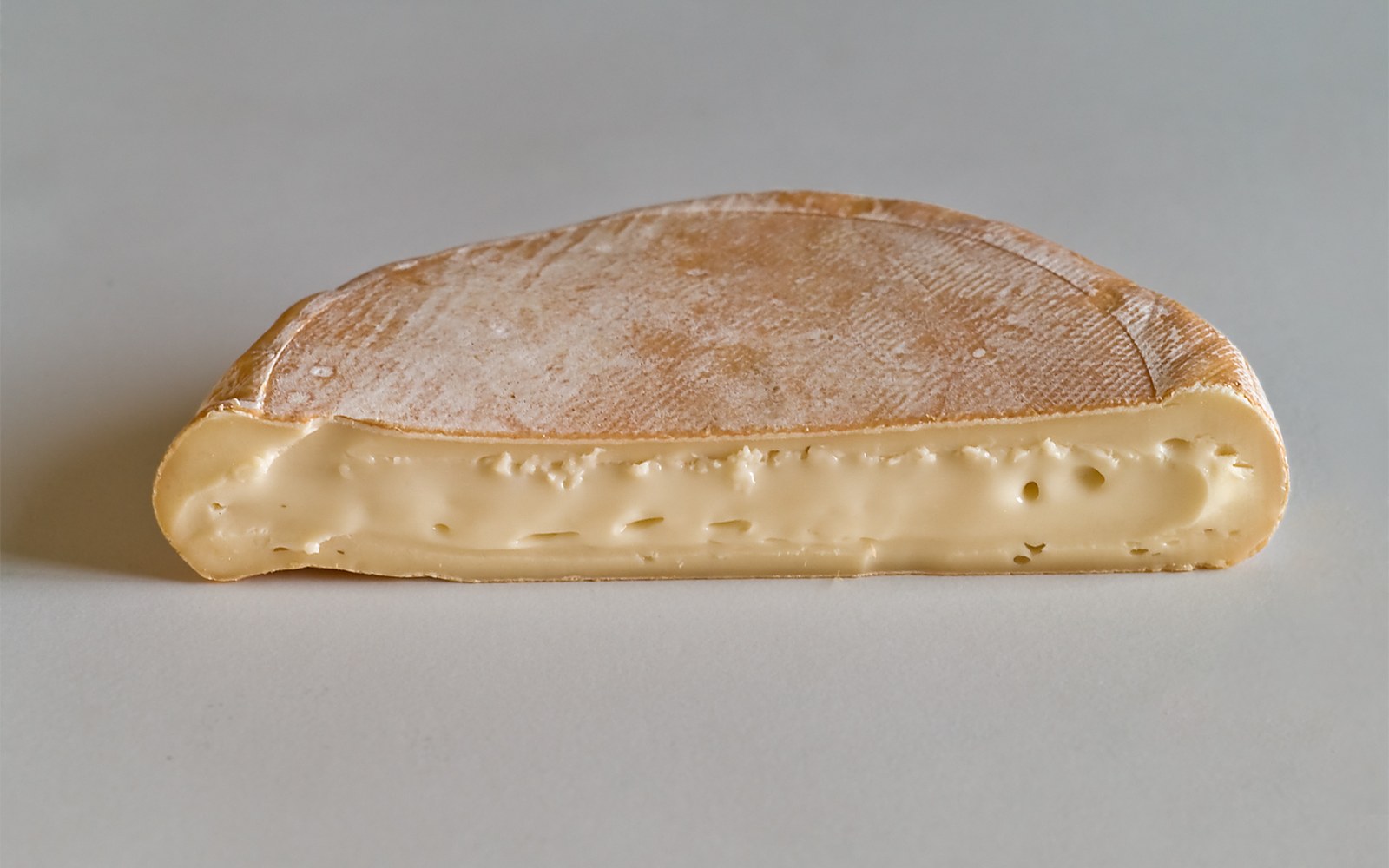
The cheese that defines the Aravis and Bauges country began not with a cheesemaker's ambition but with a landlord's ledger. In medieval Haute-Savoie, the right to graze alpine pasture — the alpage, or high summer meadow — was rented under a system that assessed dues in proportion to how much milk a herd produced. The landlord's agent came to the alpage on a fixed day, watched the cowman milk, measured what came out, and set the rent accordingly. Tenants had an obvious incentive: they held back, milking only partially in front of the agent, then milking the cows a second time once he had gone. That clandestine second milking, richer in fat than the first because the udder had been deliberately not cleared, went straight into a small wheel of cheese. In the Savoyard dialect that gave the practice its name, reblocher meant to pinch a cow's udder again — to re-squeeze. The cheese that came from the rebloching was the Reblochon.
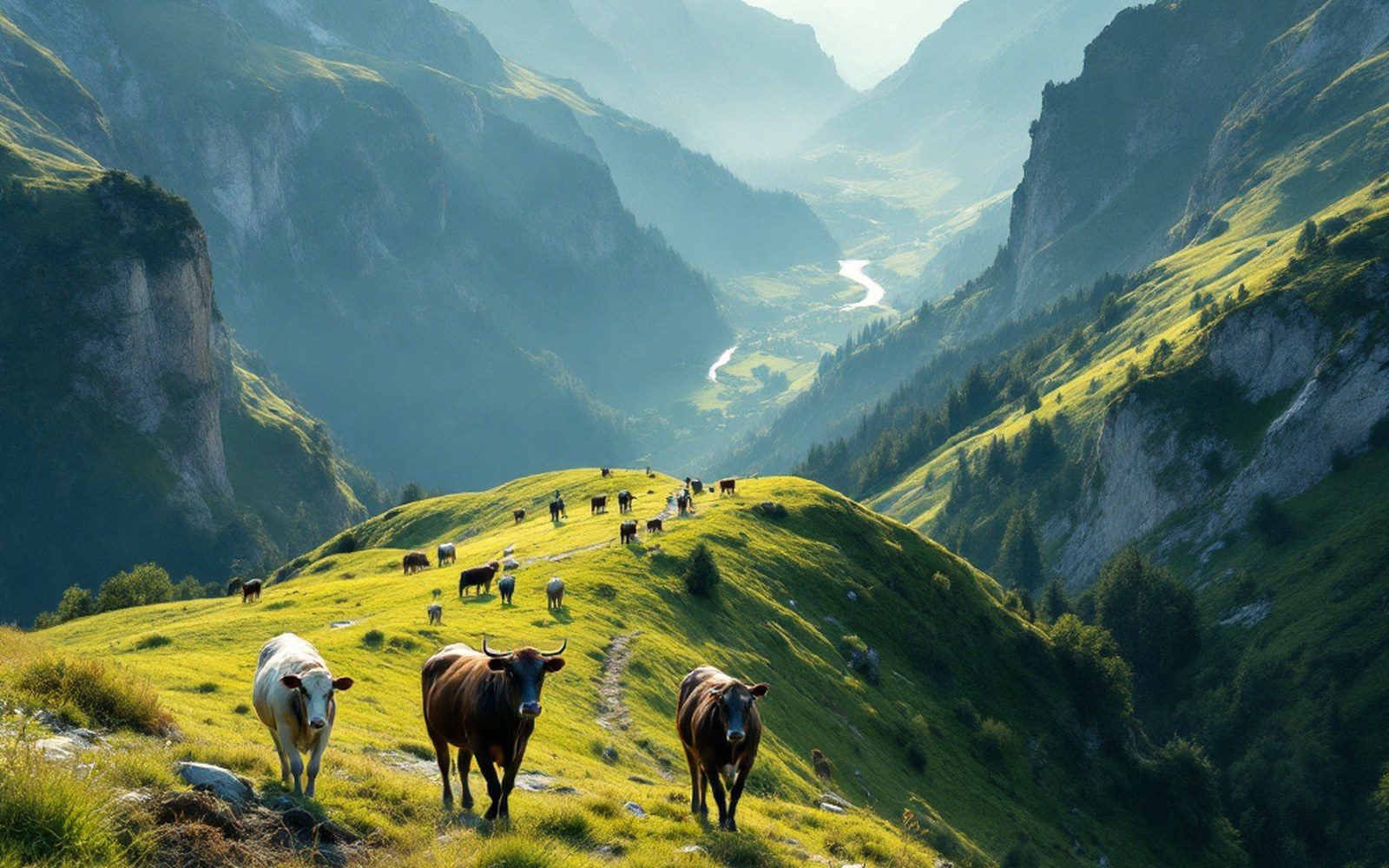
The story is genuine economic history, not a promotional legend, and the geography that produced it is specific. The cheese originated in the valleys around Thônes ↗, in the Aravis massif, and in the Bauges country immediately west — exactly the landscape that still defines the protected designation today. The Massif des Bauges, now managed in part as the Parc naturel régional du Massif des Bauges ↗, and the Aravis chain to its north-east together form the geographic core. Faverges, sitting at the junction where the Bauges slope down toward the Lac d'Annecy basin, lies on the designation's southern edge; the communes of Seythenex and Chevaline, higher on the same massif, are closer to the productive heart of it.
What the designation actually says
Reblochon received its first legal protection in 1958 and became an Appellation d'Origine Protégée — AOP, the European Union's designation of protected origin — when France's system was harmonised with EU law. The European Commission's eAmbrosia register of protected designations ↗ records the specification that every producer must follow. The cahier des charges, the rulebook, is administered through the Institut national de l'origine et de la qualité (INAO) and given operational life by the Syndicat Interprofessionnel du Reblochon, the interprofessional body that speaks for every link in the chain from farmer to affineur.
Key numbers
| Fermier disc | green casein; laitier disc: red casein |
|---|---|
| First legal protection | 1958 |
| Admitted breeds | Abondance, Tarine, Montbéliarde |
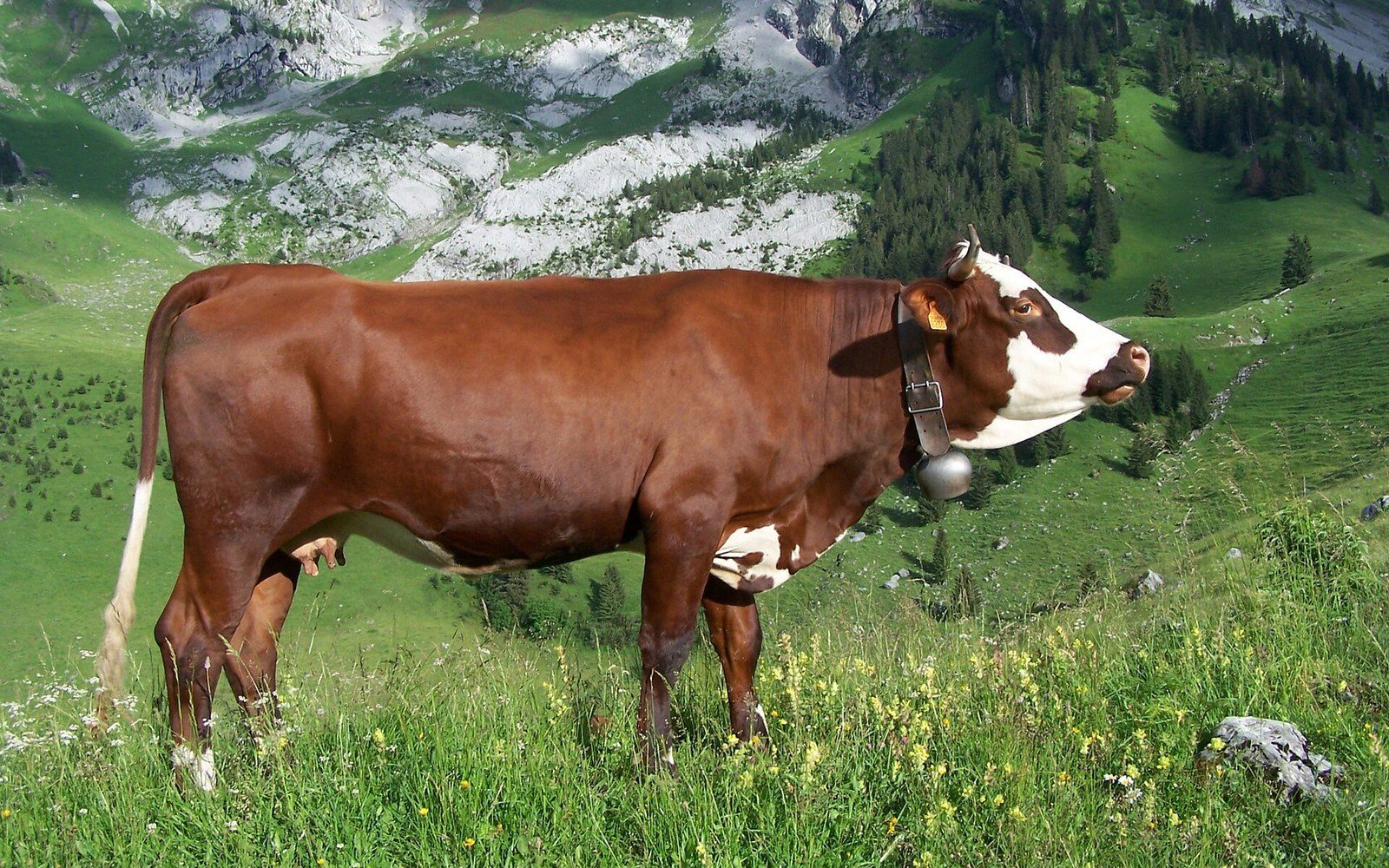
The specification is tightly geographical: the milk must come from the defined mountain zone of Haute-Savoie and a handful of adjacent communes in Savoie. Three cattle breeds are admitted — Abondance, Tarine and Montbéliarde — and no others. All three carry mountain genetics suited to the terrain, but they differ in character. Abondance is the mahogany-and-white native of the valley below the Col des Gets, lower-yielding but rich in fat; the Tarine, small and brown, thrives on thin upland grass; the Montbéliarde brings volume and is admitted for Reblochon, though not for every Savoyard designation.
The animals must spend summer on alpine pasture — the transhumance up to the alpage is not merely traditional, it is a condition of the designation. The cheese may be made either on the alpage itself, in a mountain dairy, or in a valley fruitière (a cooperative dairy that pools neighbours' milk), but the milk's provenance must be traceable. Grazing rules specify what the animals may eat: the cheese is a product of grass, hay and forage from the defined zone; industrial feed additives and silage are excluded by the cahier des charges, because what goes into the animal shapes what comes out of the milk. Once in the vat, the milk is curdled raw — Reblochon is a raw-milk cheese — and the caillé, the curd, is cut and pressed by hand into the characteristic flat cylinder. Petit-lait, the whey that runs off, is a byproduct that cooperatives have historically used to feed pigs and more recently to make whey butter.
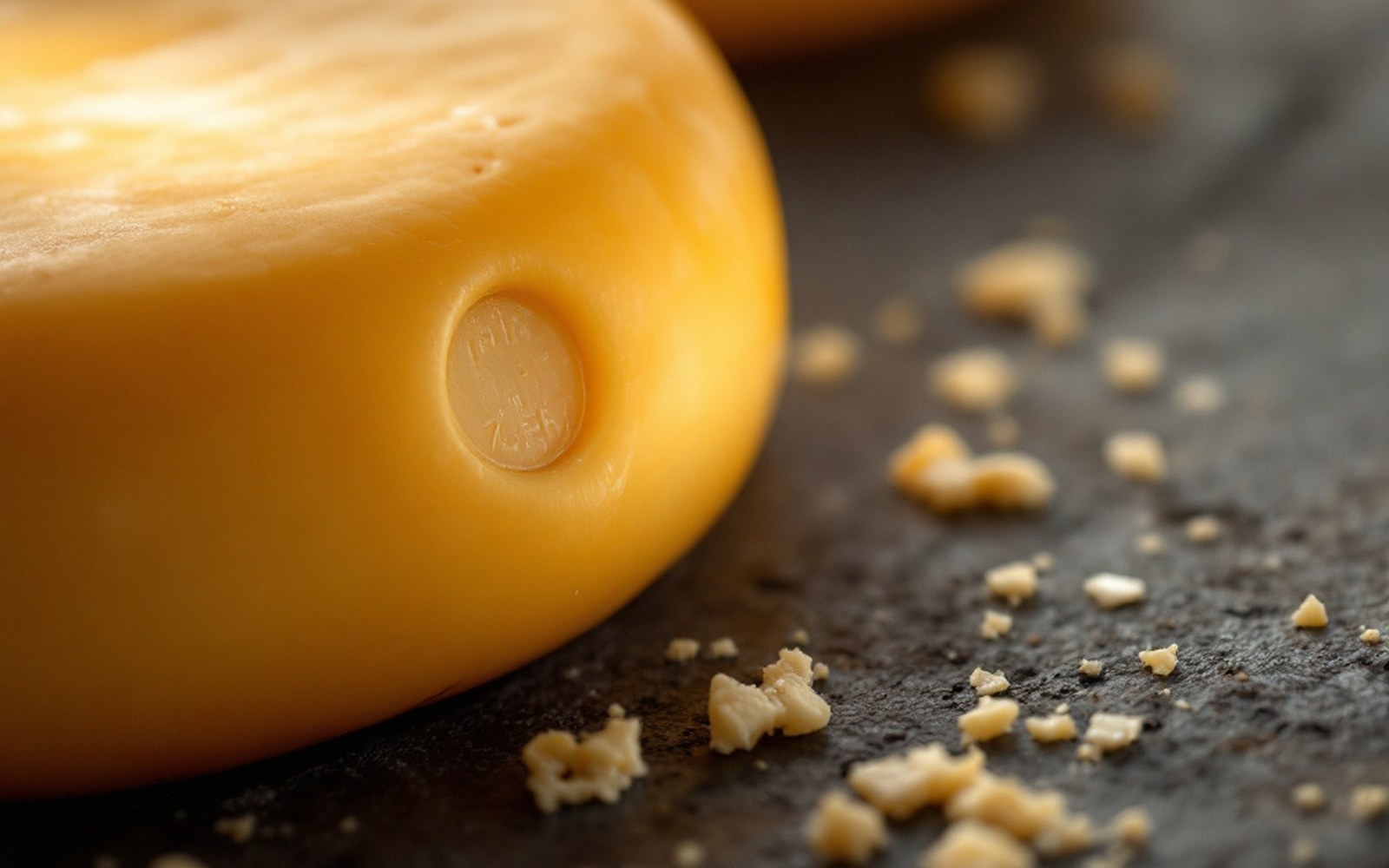
A Reblochon fermier (farmhouse) is distinguished from a Reblochon laitier (dairy) by a small green casein disc pressed into one face of the rind; the dairy version carries a red disc. The fermier label means the cheese was made on the farm where the animals are kept, in a single day's milking, without pooling milk from other herds. The laitier version may pool milk across farms — the principle behind the old tour de rôle system by which cooperative members contributed and shared — and is generally slightly larger in production volume. Both must meet the same specification for raw milk, breed and geography.
The rind, the cellar and the finish
A fresh Reblochon is a pale, almost waxy thing. What makes it recognisable at three to four weeks old is the washed rind: orange-yellow, lightly sticky, carrying the smell of warm hay and barnyard that is the badge of affinage done properly. Affinage — the cellar maturation during which a wheel is regularly turned, washed and rubbed — is the technical stage that transforms pressed curd into a cheese with presence. The minimum legal maturation is fifteen days from the date of manufacture, which makes Reblochon one of the shorter-aged of the Alpine wheels, though many affineurs hold it longer to develop flavour.
Three cattle breeds are admitted — Abondance, Tarine and Montbéliarde — and no others.
The washing encourages a specific microbial population on the surface — principally Brevibacterium linens and related organisms — while the high-humidity cellar keeps the paste from drying. The interior softens progressively beneath the rind; at the right moment the paste is supple, cream-coloured, and will yield to finger pressure without breaking. The emmorgeage — the washing and rubbing of the rind at intervals — is done by hand in traditional cellars, and the interval between washings is most of what distinguishes one affineur's style from another's.
The wheel itself is modest in dimension: roughly fourteen centimetres across and three to four centimetres deep, weighing around 450 grams for the fermier and up to 550 grams for the laitier. That smallness is a consequence of origin: a cheese made surreptitiously from a single second milking, in quantity limited by how much milk a tenant could conceal, was never going to be a large wheel. The Beaufort up the valley is a great communal enterprise; the Reblochon is, constitutionally, a private act.
That character persists in the cheese. Where Beaufort is austere and keeps for months, Reblochon is intimate — a short window, a soft interior, a smell that insists on immediacy. The AOP that now governs it is meticulous about breed, feed, territory and technique, but the thing the designation is ultimately protecting is the relationship between a particular kind of mountain milk and a particular kind of speed: make it, wash it, eat it before it decides to become something else.