Why the metal has never been replaced
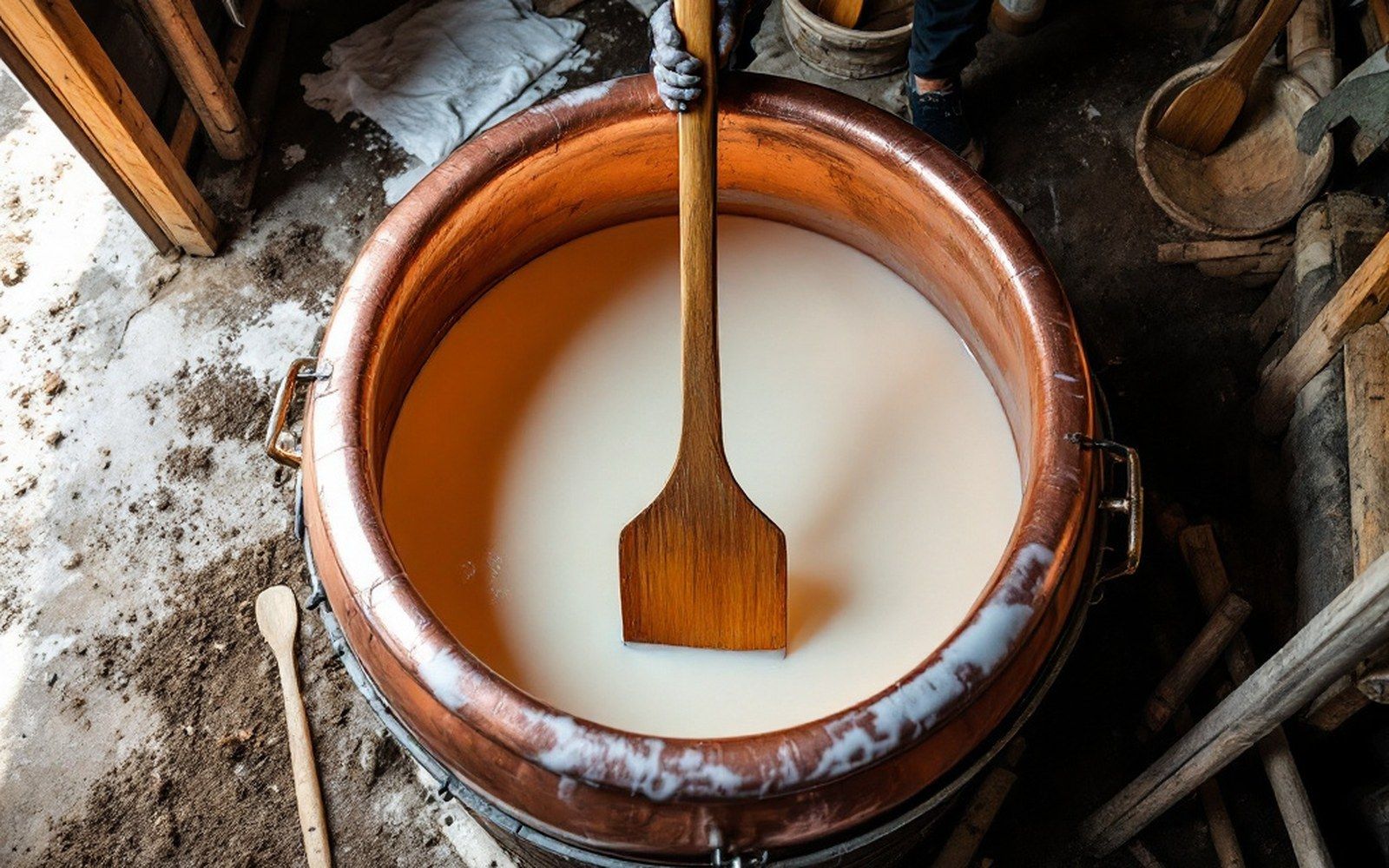
The vat at the centre of a fruitière dairy is copper, and it has been copper for as long as anyone has made cheese in these valleys. That continuity is not sentiment. Copper conducts heat with a precision that no practical substitute has matched in a production context where the temperature of the curd at each stage of the make determines the texture and moisture of the finished wheel — and where getting it wrong is not recoverable.
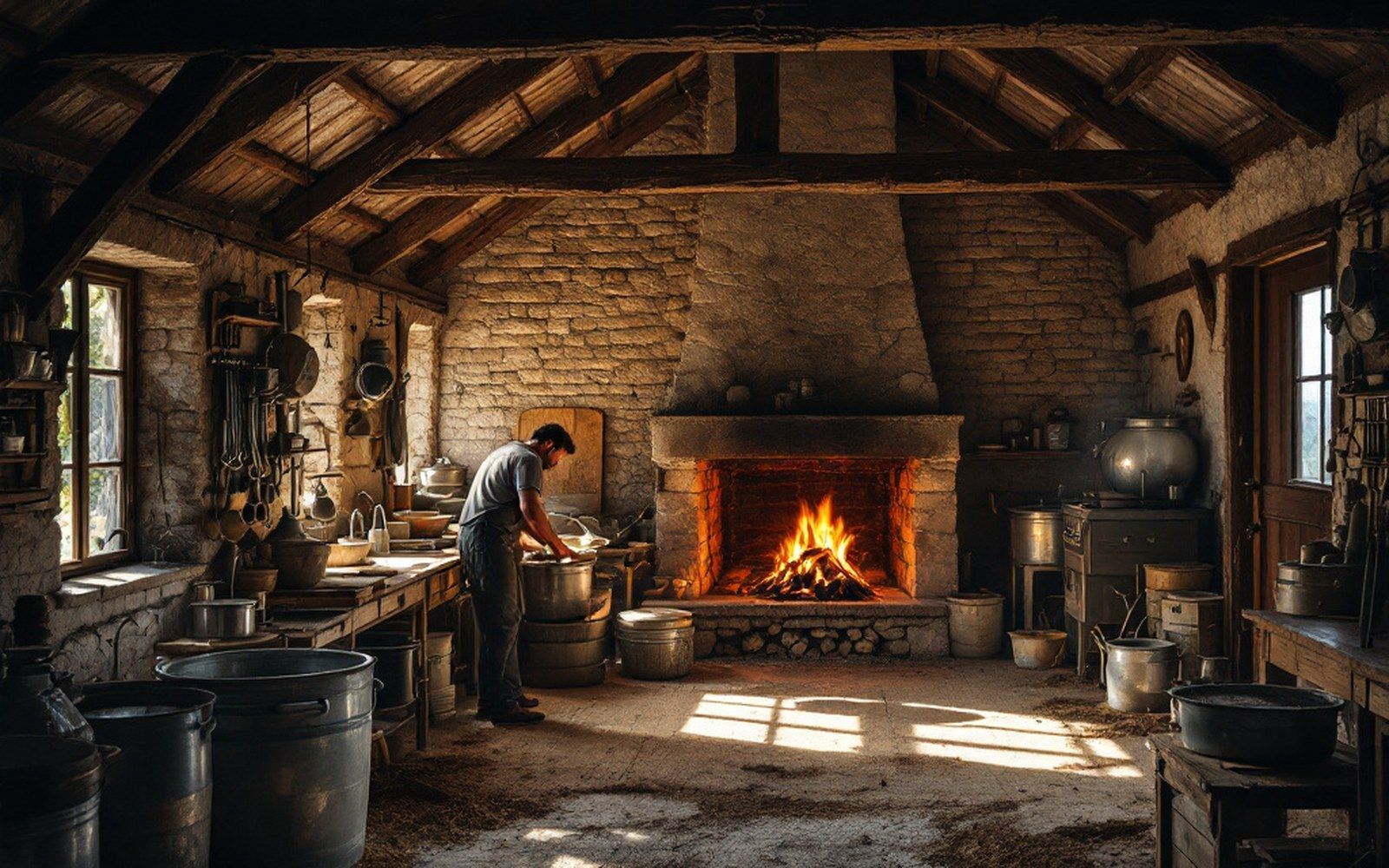
Heat distribution is the first reason. A copper vat, whether fired from below by a wood burner or connected to a steam jacket, transmits heat across its curved base and sides without the hot spots that stainless steel, a worse conductor, can introduce. The curd — caillé in French — is a fragile, living mass at this point: uneven heat causes uneven syneresis, the expulsion of petit-lait (whey), and a wheel that drains inconsistently will not age consistently. In a cellar where turning and time do most of the work, the texture arriving from the vat is already the texture you are committed to.
The make in sequence
- Milk inthe morning's pooled milk poured into the preheated vat
- Cultures and rennet addedacidification and coagulation begin
- Curd cutthe solidified mass sliced into small cubes to begin whey expulsion
- Stirring and heatingtemperature raised gradually; curd grains firm up
- Drainingwhey drawn off; curd moulded and pressed
The second reason is chemical. Copper ions at low concentrations are mildly bactericidal, suppressing the growth of gram-negative bacteria, including coliforms, that would otherwise compete with the lactic cultures doing the actual work of acidification. Research into copper's antimicrobial role in food-contact surfaces ↗ has confirmed what cheesemakers have worked around empirically for centuries: the metal is not merely inert infrastructure but an active participant in the microbial environment of the make. A stainless vat, being biologically neutral, depends on external hygiene controls to do what copper does passively.
The third reason is practical. Copper forms a surface oxide — the thin green patina visible when a vat is left unused — that is easily removed with acid whey before each make. The metal then presents a clean, reactive surface. Cheesemakers in the Massif des Bauges and the valleys around Faverges have used the petit-lait drained from the previous day's make to scour the vat in the morning; the acid does the work that detergent and hot water do in a modern food-processing plant, and it does it without introducing residues that affect the cultures in the next batch.
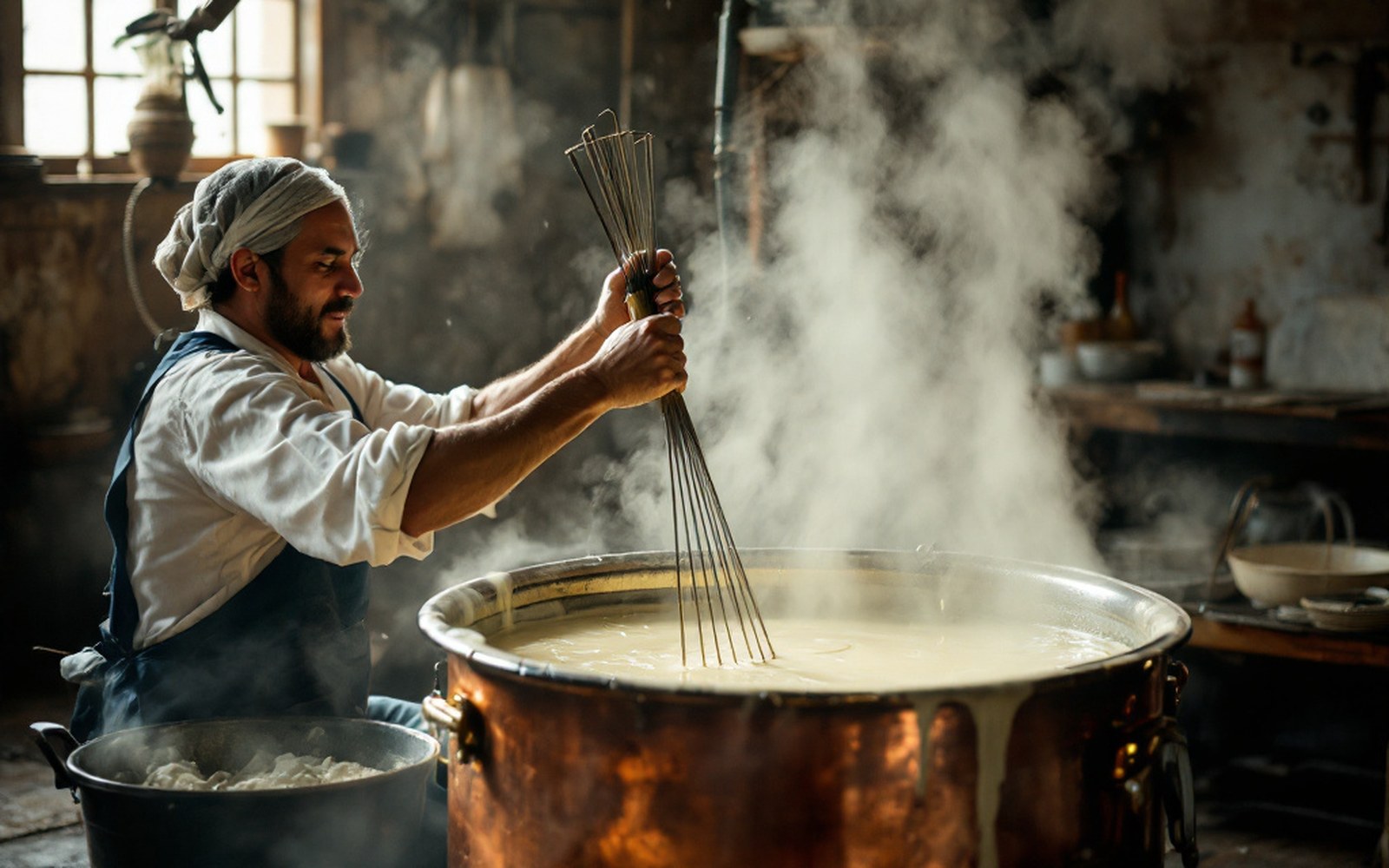
The specifications (cahiers des charges) for the three designations made in this zone — Reblochon de Savoie, Tome des Bauges and Chevrotin — do not mandate copper by name, but they require conditions of production, particularly on-farm and alpage cheesemaking, that in practice favour it. On a high summer pasture where the fruitière operates seasonally and water must be hauled or piped, a copper vat is easier to maintain and repair than a fabricated stainless unit. Itinerant coppersmiths — chaudronniers — historically served the alpages of the Haute-Savoie precisely because the material could be beaten back into shape, a patch soldered over a crack, a handle re-riveted, without removing the vat from service for more than a day.
A stainless vat, being biologically neutral, depends on external hygiene controls to do what copper does passively.
Modern fruitières at valley level increasingly use stainless vats with copper lining on the interior surface, preserving the functional advantages while reducing the weight and maintenance overhead. The Institut national de l'origine et de la qualité ↗ tracks the technical evolution of production tools when specifications come up for revision, and the question of lining materials has appeared in those discussions. So far the practical case for copper has outweighed any argument for replacing it entirely.
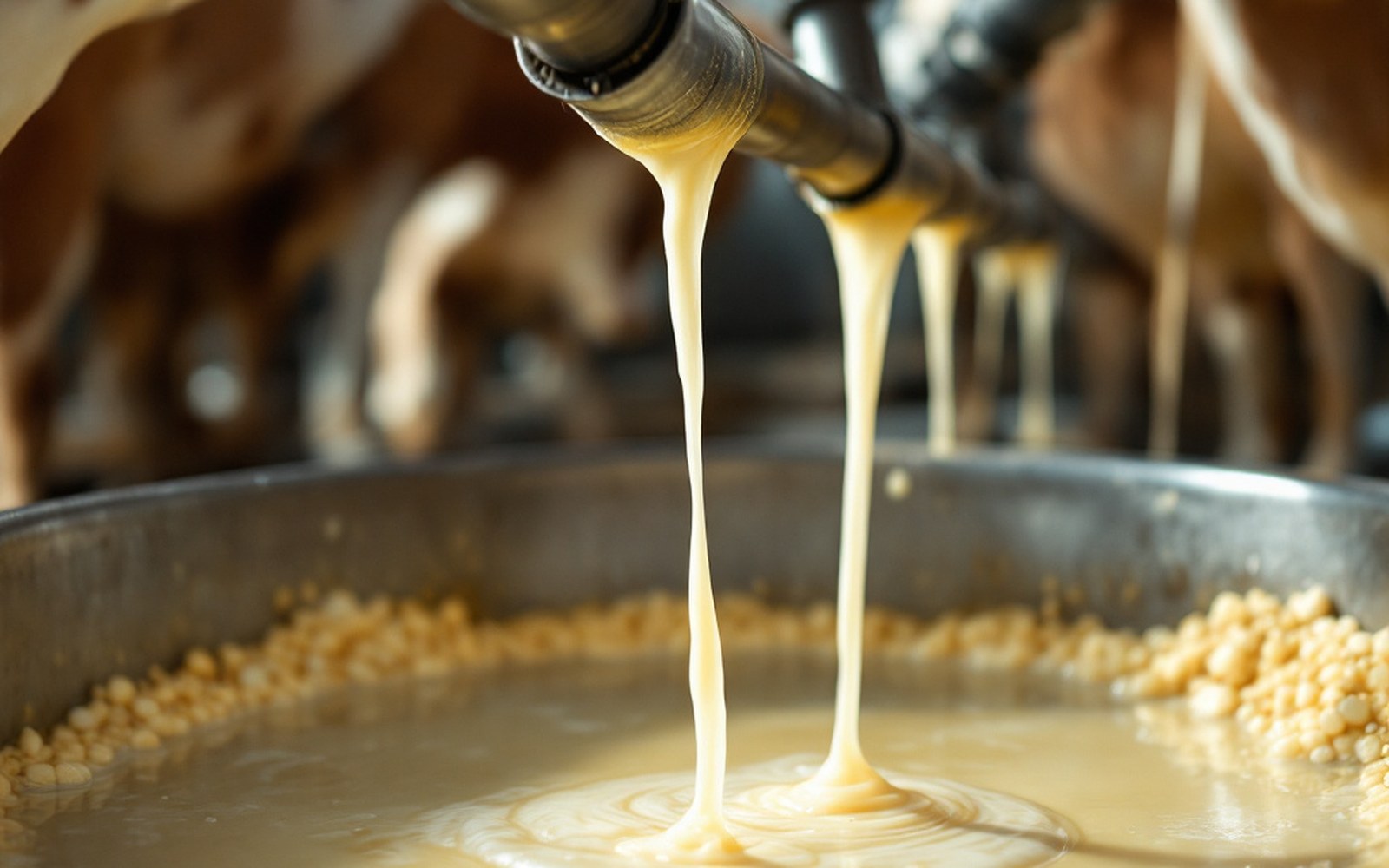
What the vat makes visible, in a way that a closed stainless tank does not, is the sequence of the make: the milk going in, the colour shift as the cultures acidify it, the curd forming under the surface, the whey rising as the mass is cut and stirred. Cheesemakers who learned in copper vats describe reading the curd by eye and hand; the metal, being visible and responsive to touch, makes that learning possible in a way a sealed system never could.