
When it was your turn, you took the wheel
The fruitière — the alpine cooperative dairy — solved one problem immediately and created another. Pooled milk meant that the neighbours could produce a wheel large enough to be worth making, but it also meant that nobody could say, of any given wheel, that it belonged to them alone. Every wheel in the cellar was made from everyone's milk combined. So how did you decide who took it home?
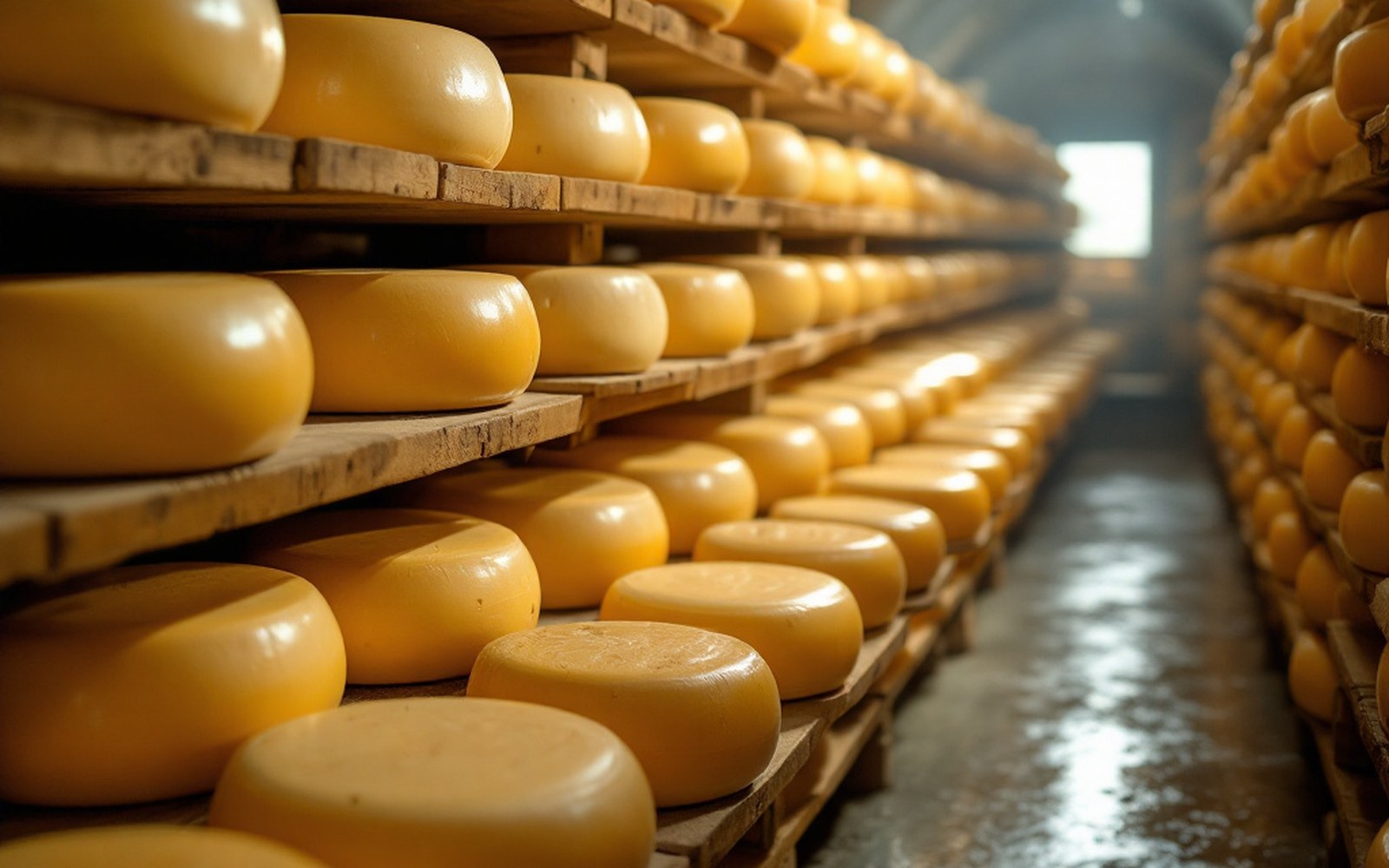
The answer was the tour de rôle: a rotation system, recorded in a ledger, that assigned finished wheels to members in strict proportion to what they had contributed. You did not own a share of every wheel. You owned, notionally, the right to a wheel — or a fraction of one, or several — once enough of your milk had accumulated in the common account to cover it. When your turn came around on the rota, you took the wheel and the debt was cleared.
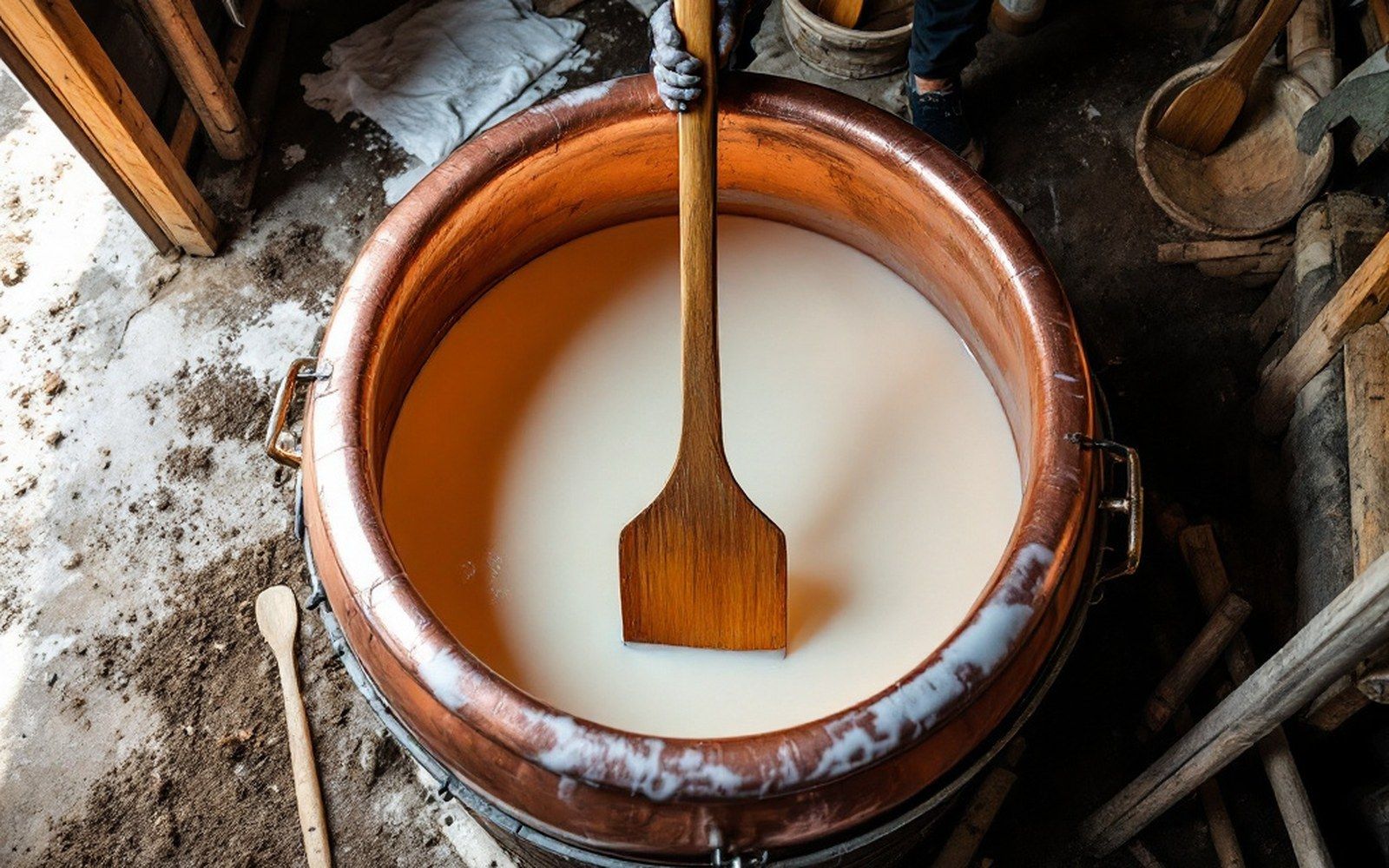
The ledger was the mechanism that made this honest. Every delivery a farmer made to the fruitière was weighed and entered: name, date, volume. Because the yield of milk per wheel varied slightly with the season — summer milk richer, spring milk thinner — the accounts were kept in milk-weight rather than in wheels, and the conversion was applied at the point of allocation. A farmer who delivered twice as much milk as his neighbour over a season would take twice as many wheels, but neither farmer handled the other's milk once it had gone into the vat; the individual contribution dissolved the moment it crossed the threshold of the dairy room.
How the allocation worked
- Milk delivered byweight, recorded per farmer per day
- Conversion to wheel-equivalentsapplied at point of allocation, not at delivery
- High-delivering members rotatedto the top sooner; the rota ran at different speeds
- Disputes settled atthe annual assembly of cooperative members
The rotation was not random. Members with larger herds delivered more and so reached their allocation sooner; the rota moved at different speeds for different people. In a small fruitière of eight or ten households, the ledger was simple enough to maintain by hand, and disputes were settled at the cooperative's annual assembly. In larger operations — those serving a whole valley commune rather than a single alpage — the accounting grew correspondingly complex, and a dedicated treasurer or secretary kept the books year-round.
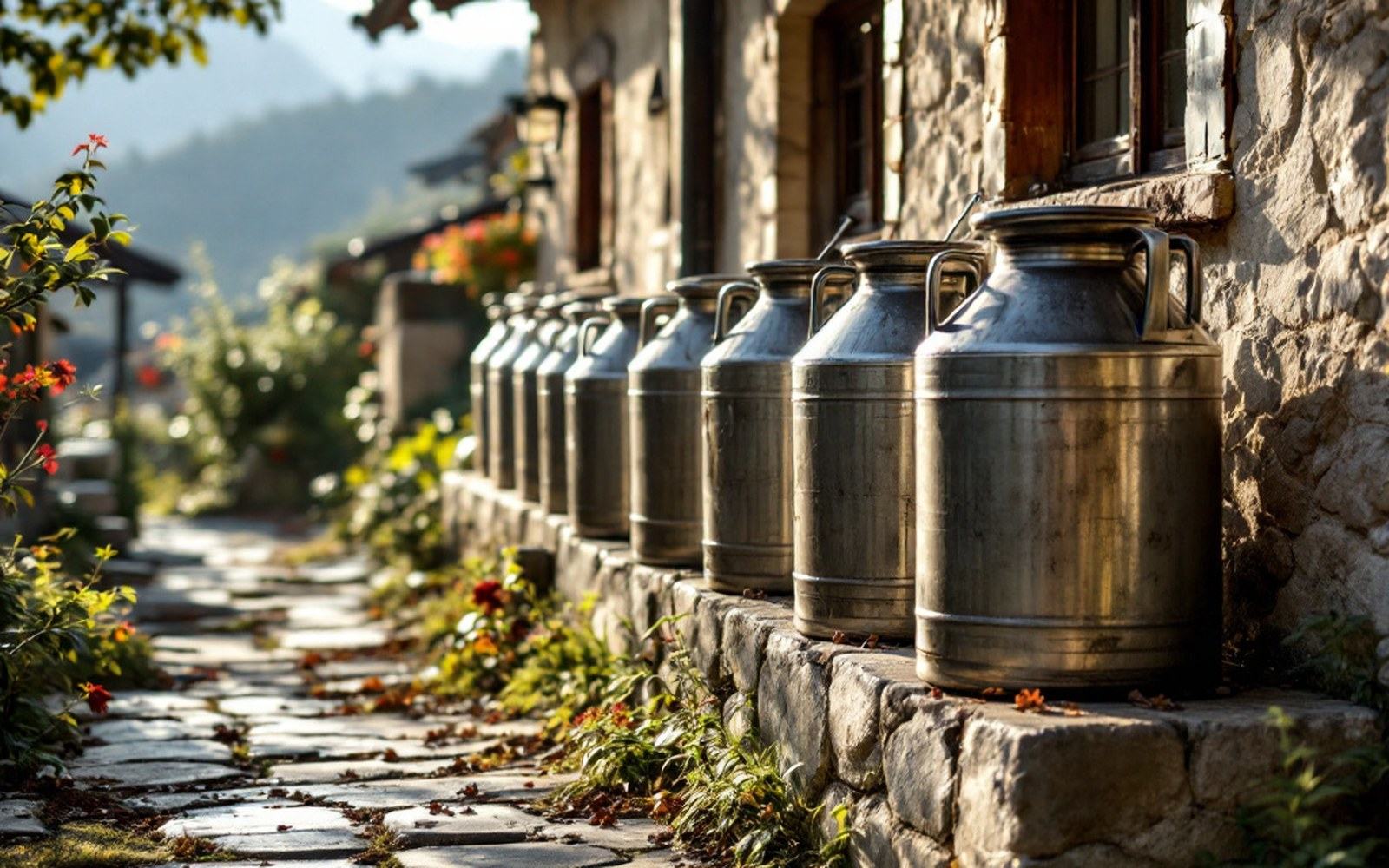
This system is centuries old in the Alps and is documented from at least the late medieval period in the valleys around Thônes and in the Massif des Bauges to the southwest. The fruitières of the Thônes basin, which today produce Reblochon de Savoie, operated under essentially this logic long before the designation existed. The word fruitière itself derives from the idea of sharing the fruits — the produit — of a collective enterprise, and the tour de rôle ↗ was the mechanism by which that sharing was made precise.
Members with larger herds delivered more and so reached their allocation sooner; the rota moved at different speeds for different people.
What the system also did, less obviously, was create a powerful incentive for quality. If you delivered sour or contaminated milk, it went into the common vat and you damaged everybody's wheel — including the one that would eventually be yours. The tour de rôle aligned individual interest with collective outcome in a way that a simple cash payment for milk would not. Your reputation at the dairy was your credit.
The Institut national de l'origine et de la qualité ↗, which administers the French protected designation framework, recognises that these cooperative structures are foundational to the designations they govern. The cahier des charges — the technical specification — for each AOP does not merely describe a cheese; it presupposes a particular mode of organising production, and the fruitière with its rotation system is part of that infrastructure. Even today, cooperative dairy members in alpine zones ↗ operate under rules that trace a direct line back to the tour de rôle: delivery is logged, yield is calculated, and allocation follows the ledger.
The book has been computerised in most fruitières. The principle has not changed.