The massif and its cheese
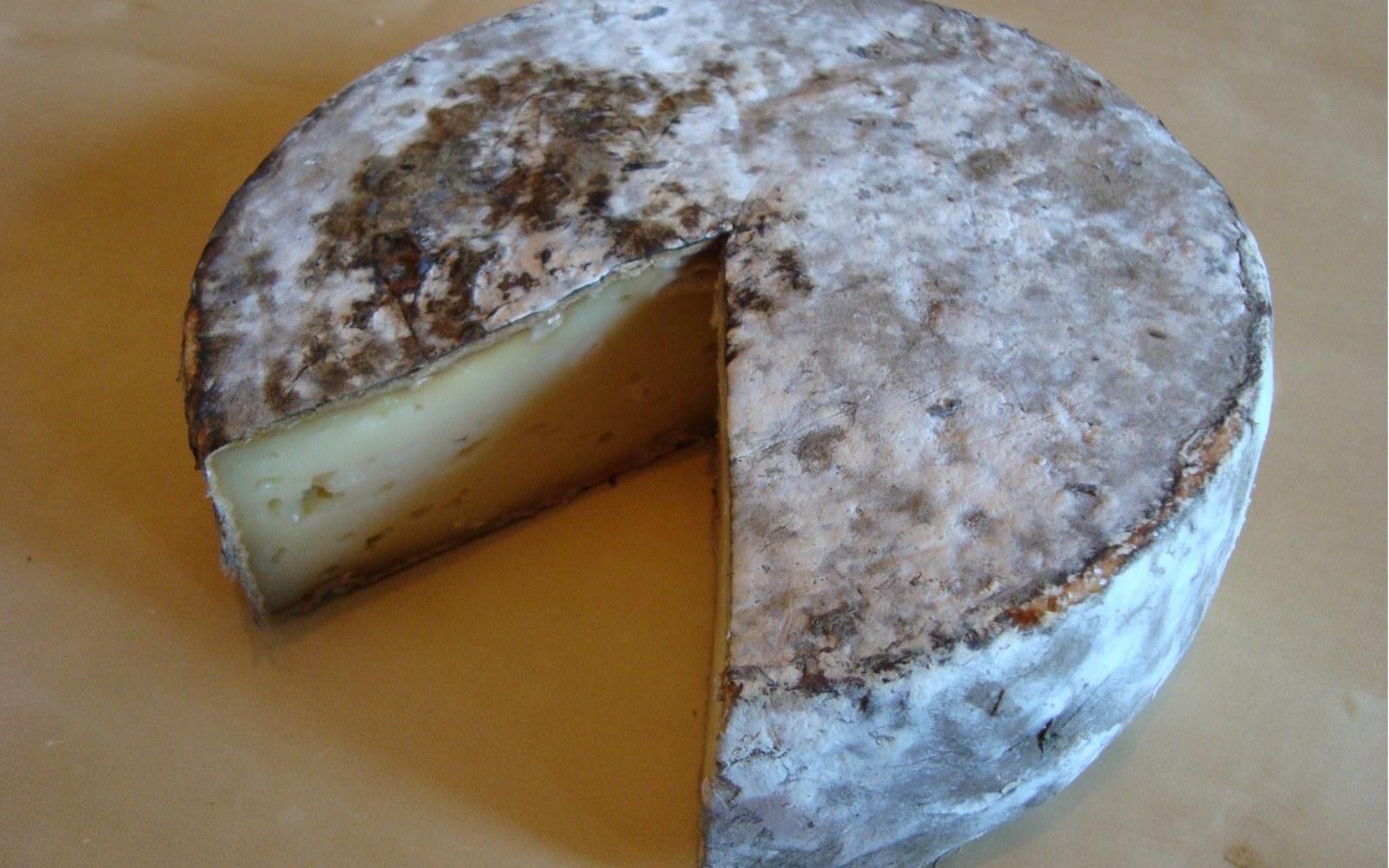
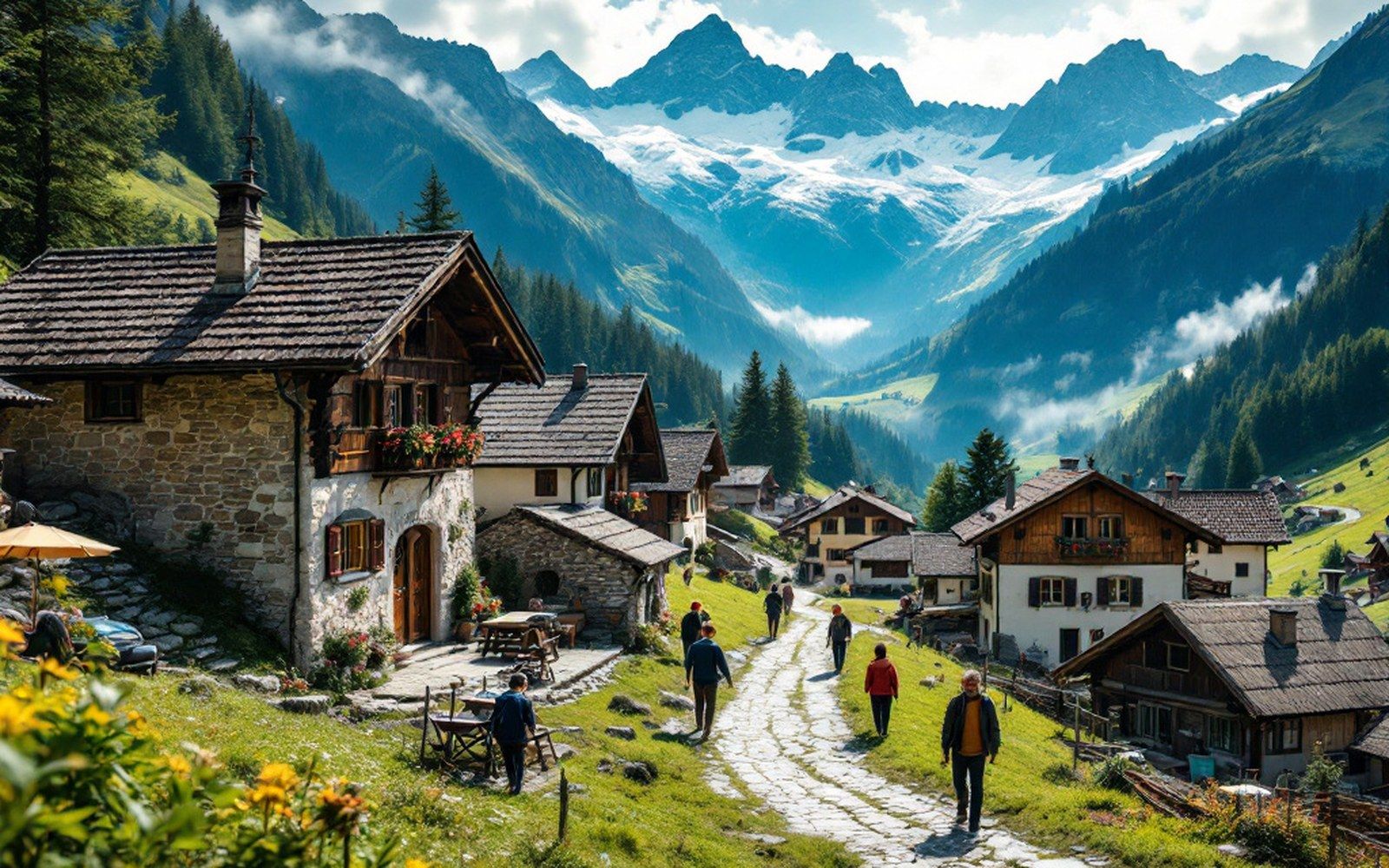
The Massif des Bauges sits directly south of Lac d'Annecy, its ridgelines visible from the market square in Annecy itself. It is a different landscape from the Chablais or the Val d'Arly — lower, more enclosed, its villages connected by narrow roads that still feel provisional — and it produces a different cheese. Tome des Bauges is a semi-hard, washed-crust wheel with a dry grey rind, a supple ivory paste and a flavour that reads as earthy, mild and lactic rather than the assertive nuttiness of a longer-aged mountain cheese. It is not Reblochon, and the Bauges has always been clear on that point.
The cheese earned its Appellation d'Origine Protégée — AOP, the European designation that ties a product to a defined territory and method — in 2002, though the tradition behind it is considerably older. The wheel typically weighs between 1.2 and 2 kilograms, with a diameter of around 18 to 21 centimetres and a height of around 3 to 5 centimetres. It is smaller and flatter than many Alpine wheels, shaped by the volumes a single farmstead or small cooperative could realistically process in a day.
The specification at a glance
| Minimum affinage | five weeks |
|---|---|
| Permitted breeds | Abondance, Tarine, Montbéliarde |
| Feed rule | fresh grass in summer; hay in winter; no silage |
| Designation year | AOP granted 2002 |
Breed, altitude and the cahier des charges
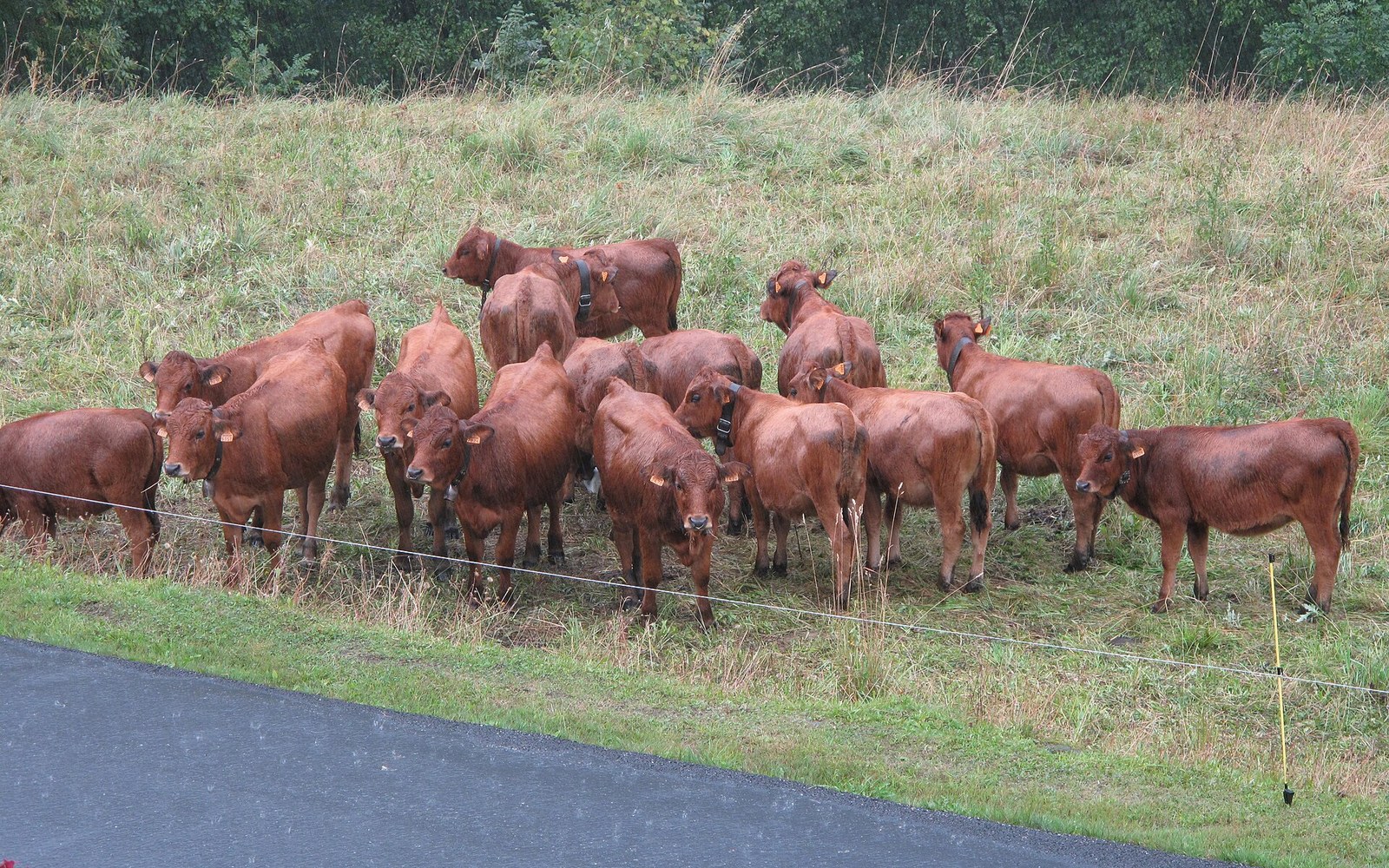
What makes Tome des Bauges legally itself is its cahier des charges — the formal specification lodged with the Institut national de l'origine et de la qualité ↗ and recorded in the European Commission's eAmbrosia register of protected designations. The specification admits three cattle breeds: Abondance, Tarine and Montbéliarde. These are the same breeds recognised by Reblochon and Beaufort, but the Bauges gives them a different context. The pastures here sit at altitudes that overlap with the lower alpages of communes such as Chevaline and Seythenex on the eastern edge of the massif, and the specification requires that summer-milk cheese be produced from herds at altitude — the alpage, the high pasture grazed only between late spring and early autumn.
The grazing rules matter. Animals must eat fresh grass in summer and dry hay in winter, with no silage permitted. This is the mechanism by which a designation pins a flavour to a landscape: restrict the feed, and you restrict what can reach the milk. The microbial population of the Bauges pastures — influenced by the Parc naturel régional du Massif des Bauges ↗, which covers much of the production zone — has its own character, and the cheese specification is designed to let that character through rather than homogenise it away.
These are the same breeds recognised by Reblochon and Beaufort, but the Bauges gives them a different context.
The rind and the room
Tome des Bauges is a washed-rind cheese during affinage — the ripening period of at least five weeks specified in the cahier des charges. The wheel is rubbed and turned regularly so that a grey-brown natural mould develops across the crust, the population encouraged by the humidity and temperature of a proper cellar. That grey rind is the visual signature: it is not waxed, not pressed smooth, not identical from wheel to wheel. Beneath it the paste should be flexible without being sticky, with small irregular eyes.
Much of the production passes through small fruitières — the cooperative village dairies where pooled milk from several farms is processed together under one roof. In the Bauges this model has been maintained more consistently than in some parts of Haute-Savoie, partly because the terrain discourages large-scale consolidation and partly because the designation specification actively supports farmstead and cooperative production. Thônes, the market town of the Val de Thônes east of Annecy, in the Aravis rather than the Bauges,, has historically been a point of collection and sale for cheeses from both the Bauges and the Aravis valley beyond, threading the two massifs together without confusing them.