The grass defines the wheel
A designation of origin is not, at its core, about recipe or technique. It is about place — and the most direct line between a place and a cheese runs through the animal's mouth. The rules that govern what cattle may eat inside an AOP (appellation d'origine protégée, the French implementation of the European protected-designation system) are among the most consequential clauses in any cahier des charges, the specification document that every recognised cheese must meet.
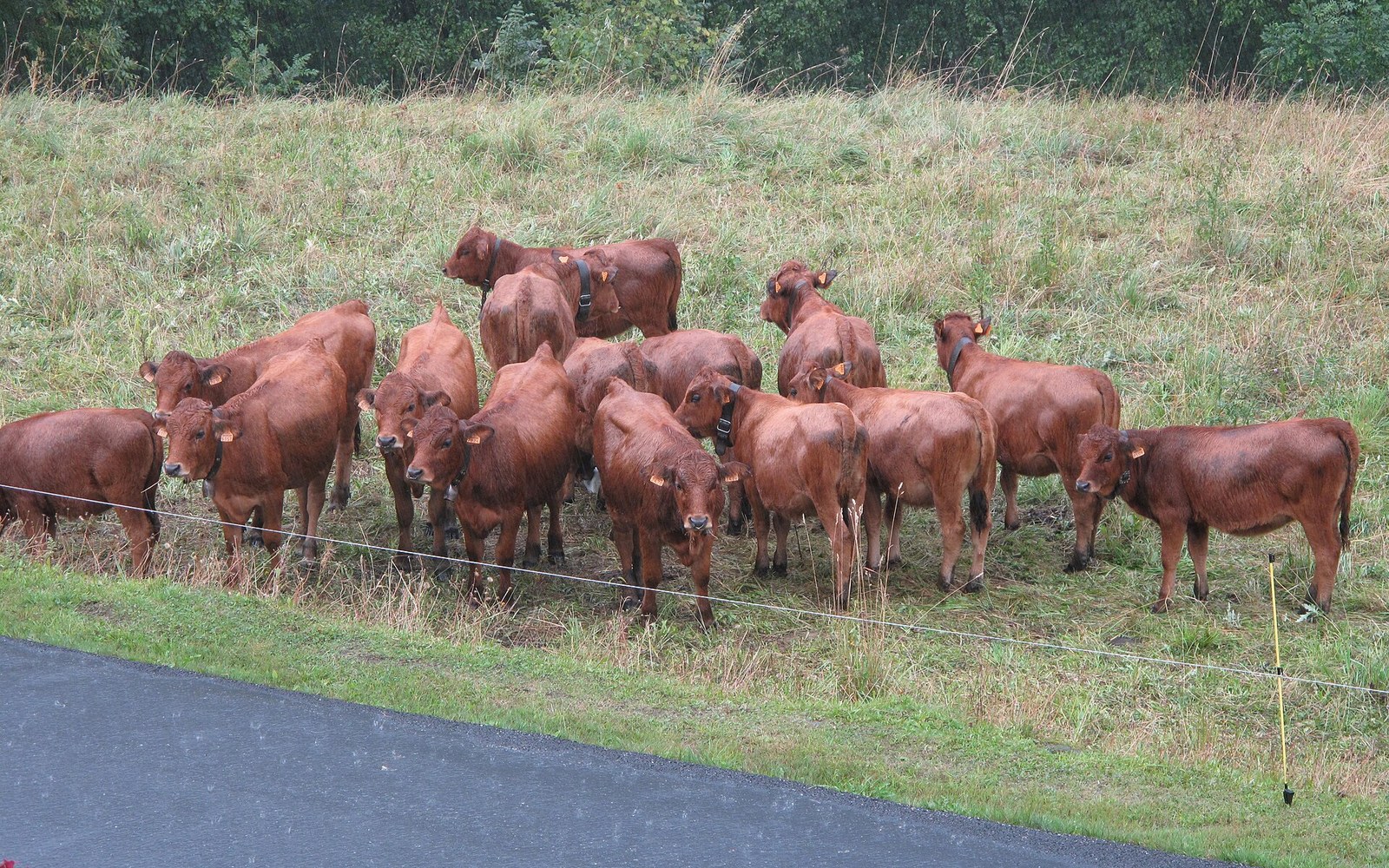
In the massifs around Faverges — the Bauges to the south and the Aravis to the north, with the Lac d'Annecy basin between — the fundamental rule is straightforward in principle and demanding in practice: the herd must graze living grass for a substantial part of the year, and what it eats off the mountain must come from the mountain. Both the Reblochon de Savoie and the Tome des Bauges specifications fix a minimum period on fresh forage — typically at least 150 days across the year — and restrict the use of fermented feeds such as silage. Silage, the ensiled, anaerobic fermentation of cut grass, is excluded from both designations entirely. The prohibition is chemical as much as philosophical: certain bacteria present in silage, notably Listeria monocytogenes and butyric clostridia, can survive into raw milk and disrupt the curd; for a wheel that will be pressed and left to ripen at altitude, the consequences are irreversible.
How feed rules work by season
- Winter (barn)hay only, cut from within the declared zone; no silage, no fermented feed
- Transition (spring/autumn)fresh grass as available, hay as supplement; grazing period minimum counted here
- Summer (alpage)unfertilised high pasture; the reference diet for breed performance and milk character
- Concentratespermitted in small quantities year-round but sourced from within the zone or explicitly approved; threshold fixed in the cahier des charges
From the floor of the valley to the alpage
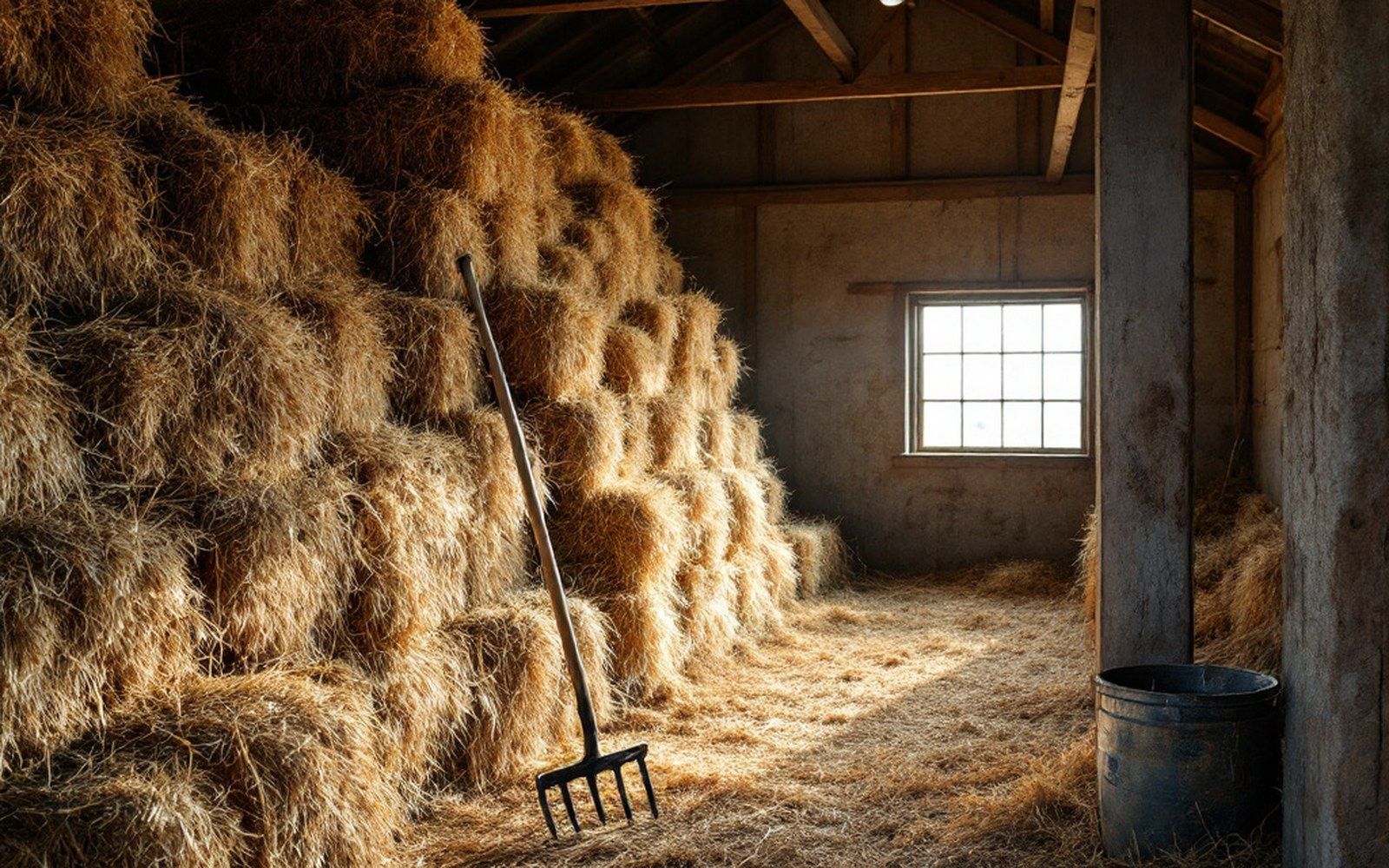
The cattle do not eat the same thing all year, and the specification accounts for each phase. In winter, when the herds are down in the valley barns of communes such as Faverges, Thônes or Seythenex, they eat dried hay — almost always hay cut from the same declared zone. First-cut meadow hay from these valley floors is dense and varied: grasses, clovers, trefoil, plantain, burnet, all dried together. The second cut, taken in August after the cows have gone up, tends to be finer. Neither is neutral: the aromatic compounds in mountain hay are measurably different from those of lowland industrial meadows, and they carry through into the fat of the milk.
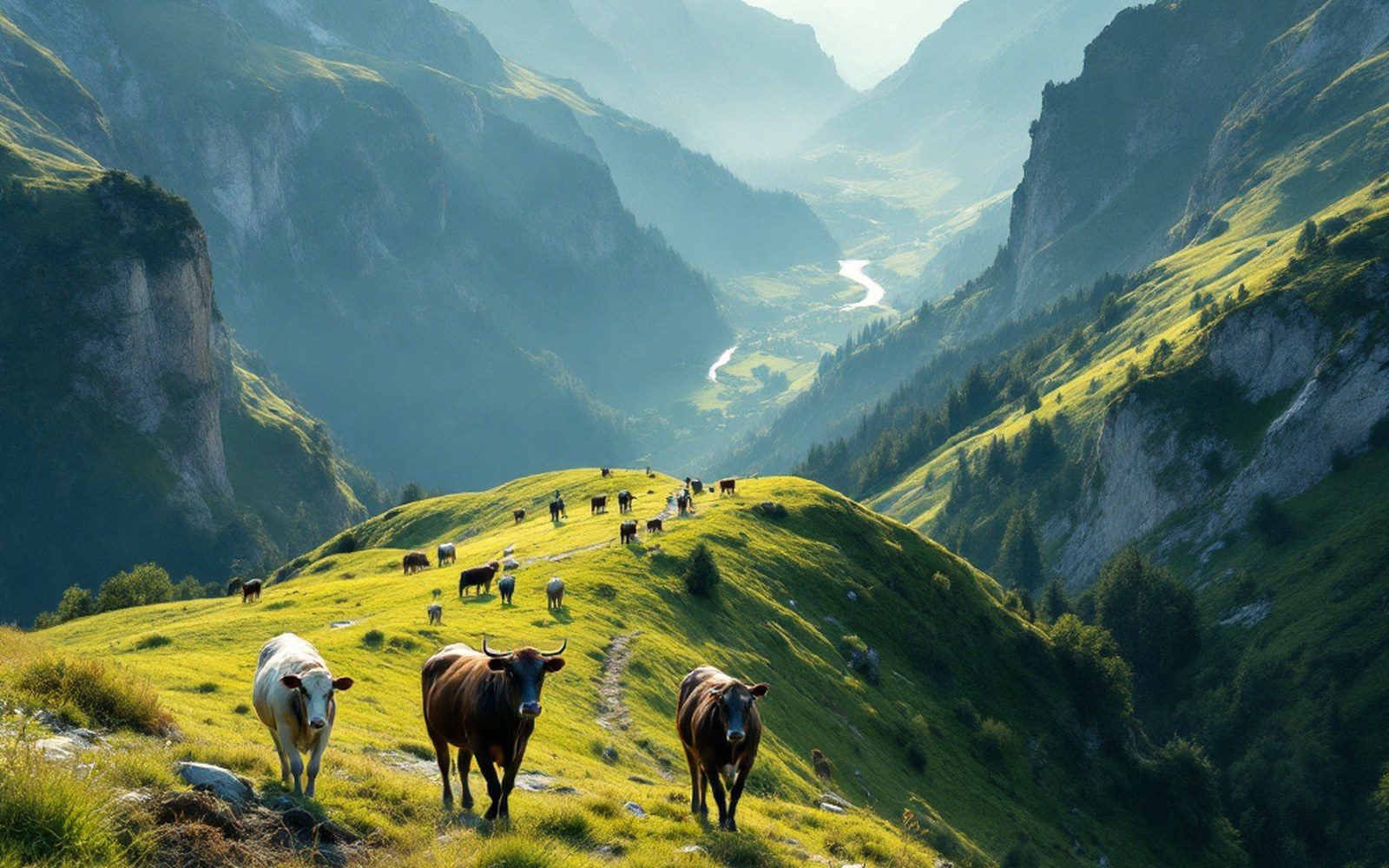
Summer changes everything. The alpage — the high pasture used only in summer, typically above 1,400 metres in this part of the Bauges and the Aravis — is unfertilised, unimproved and botanically exuberant. A single hectare of good alpine grassland may contain forty or more plant species. For the Abondance and Tarine cattle that dominate the herds here, this is the defining diet of the year, and it shows directly in the milk: fat content rises, the fatty-acid profile shifts toward a higher proportion of unsaturated fats, and the carotenoid pigments in alpine grasses give the milk — and eventually the paste of the cheese — a golden depth absent in winter production.
The second cut, taken in August after the cows have gone up, tends to be finer.
The cahier des charges for each designation, filed with the Institut national de l'origine et de la qualité ↗ (INAO) and listed in the European Commission's eAmbrosia register ↗, specifies not only what the animals may eat but where the forage must come from. Purchased feed — cereal concentrates permitted in limited quantities as a supplement — must not exceed defined thresholds, and any complementary feed must itself come from within the geographical zone or be explicitly approved. An operator cannot legally supplement a herd on highland pasture above Chevaline with grain grown outside the zone without risking decertification of that milk.
Why the restriction holds the whole system together
The forage rules do something that no amount of recipe specification could do: they make the cheese legible as a product of a specific landscape. Strip the hay obligation or permit silage, and you might produce a wheel that looks the same, smells similar and passes a texture test — but it would no longer carry the microbial, aromatic and fatty-acid signatures of these particular pastures. The designation exists to protect exactly those signatures. The restriction on what an animal may eat is, in the end, the mechanism by which a massif is made edible.