Section 4 of 5
3entries
The Designations
What the protection actually specifies.
A designation is a document before it is a cheese: breed, feed, territory, technique and a minimum time in the cellar. What follows is the three that apply here, and the marks that record them.
Every entry in The Designations
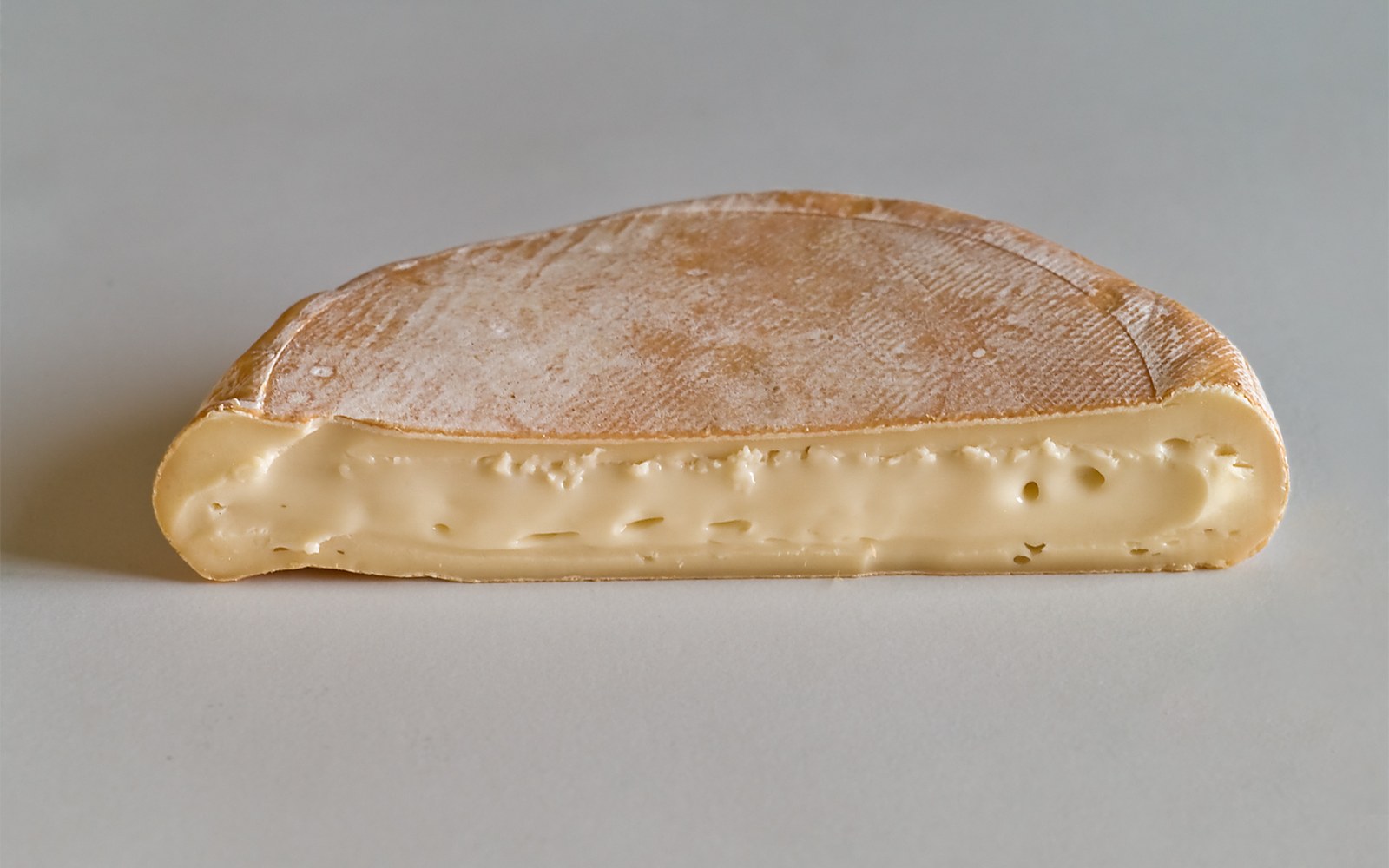
- Reblochon de SavoieThe cheese exists because of a tax: tenants under-milked in front of the landlord's agent and made cheese afterwards from the richer second milking.
- Tome des BaugesA grey-rinded wheel from the massif next door, with its own specification for breed and altitude.
- Plates and markingsA small casein marker pressed into the rind records where and when a wheel was made.
The three records, side by side
| Record | Reblochon de Savoie | Abondance | Tome des Bauges |
|---|---|---|---|
| Breeds | Abondance, Tarine, Montbéliarde | Abondance, Tarine, Montbéliarde | Tarine, Abondance, Montbéliarde — at least half the herd Tarine and Abondance |
| Milk | Raw, from the second milking | Raw and whole, rennet-set in a copper vat | Raw; historically never heat-treated |
| Grazing | No silage or fermented feed in the ration | 150days minimum a year | 120days minimum; hay at least four fifths from the massif |
| Wheel | Soft, washed rind, made twice daily | Pressed, half-cooked; 7–8 cm high, 6–12 kg, concave heel from the tightening hoop | Pressed by stacking three or four in the moulds, 7 hours minimum, 4 turnings; hand-salted dry |
| Cellar | Washed and turned on boards | 10–13 °C, humidity ≥ 90 %, unplaned spruce, turned every second day | 10–15 °C, humidity ≥ 95 %, unplaned spruce cut in the massif |
| Minimum affinage | 15days from manufacture | 100days | 5weeks |
| Mark | Green casein disc, farmhouse; red disc, dairy | Elliptical green plate, farmhouse; square red plate, dairy | Rind described in the record as tourmentée: relief and irregularity |