The logic of the turn
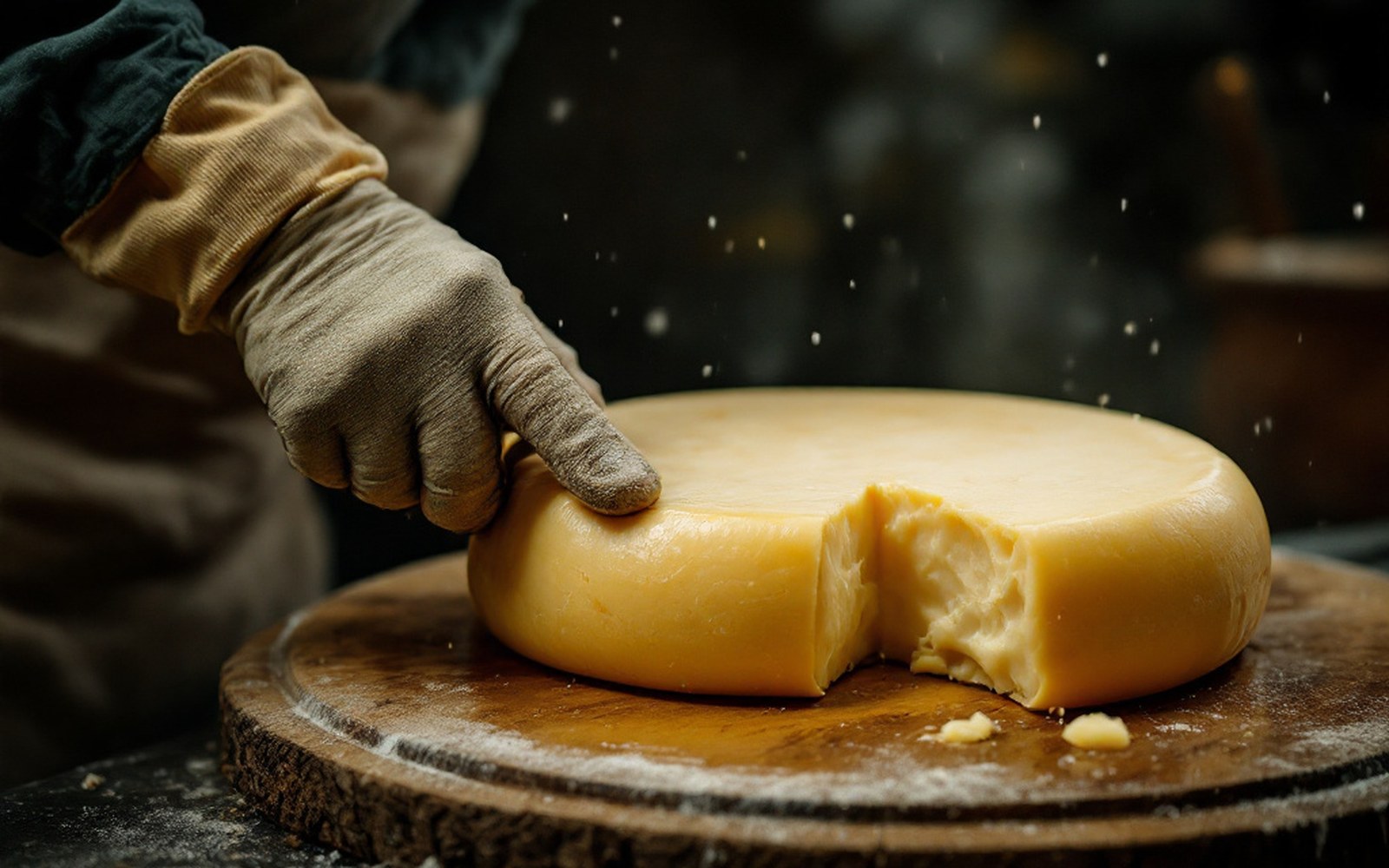
A cheese wheel left on one face will sag — the paste softens unevenly, moisture pools at the base, and the rind on the underside cannot breathe. Turning redistributes the weight, exposes each face in turn to the cellar air, and keeps the geometry honest. On a flat spruce board, the contact face matters too: the wood wicks moisture from the rind, and if the same face always rests down, that surface dries faster than the top. Alternating prevents it.
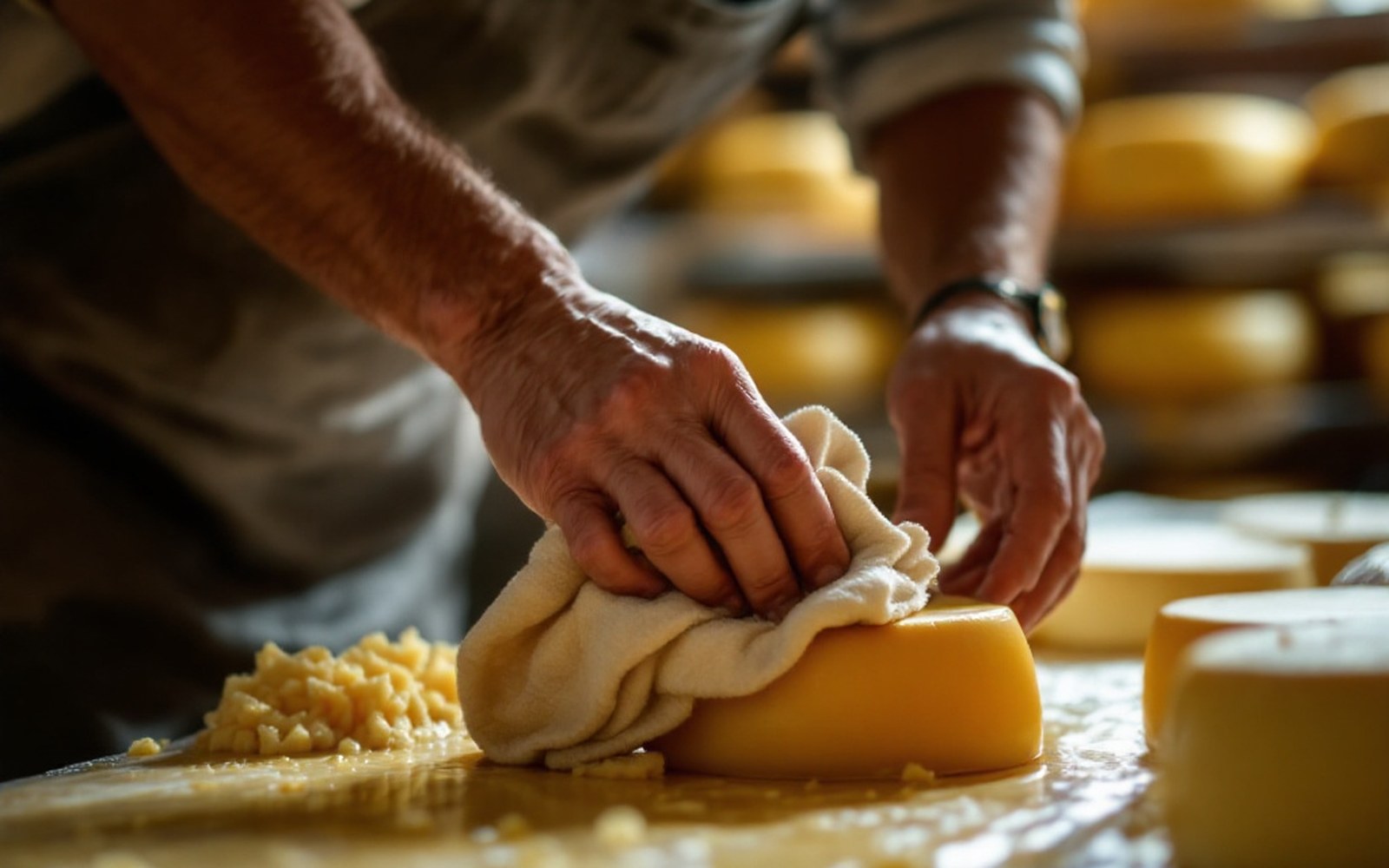
The schedule is not arbitrary. In the early days of affinage ↗ — the cellar maturation stage — a young wheel is soft and its rind barely formed, so it needs turning more often: sometimes daily, sometimes every other day. As the rind firms and the interior stabilises, the interval lengthens. The affineur reads this progression wheel by wheel, pressing lightly with a thumb, tapping to hear how the paste is moving, adjusting the rhythm accordingly. A calendar on the wall is a guide; the wheel is the authority.
Time and the designation
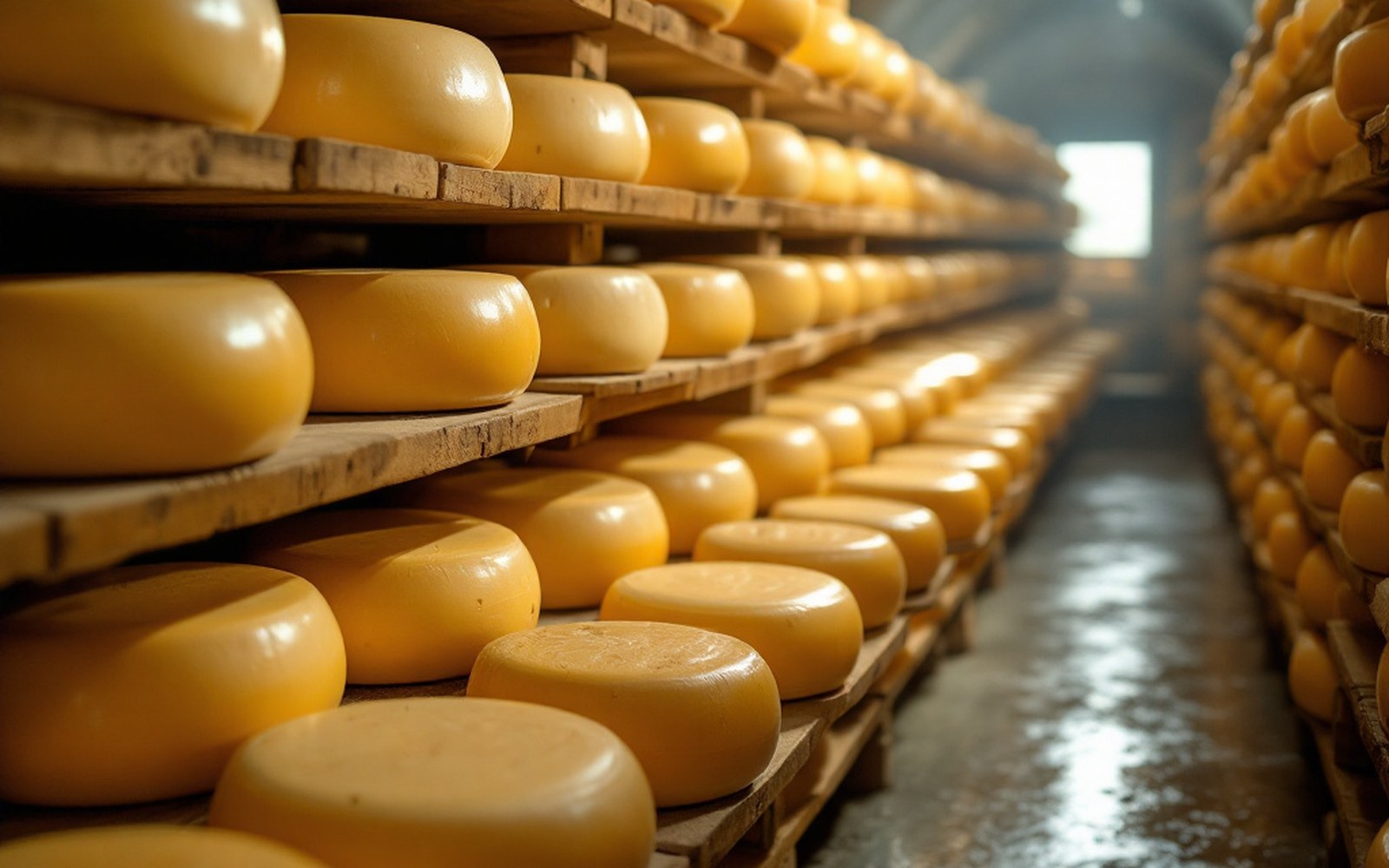
For Reblochon de Savoie, the cahier des charges — the specification document held by the Institut national de l'origine et de la qualité ↗ — sets a minimum maturation of fifteen days from the day of manufacture. Those fifteen days are not passive: each one involves handling. The wheel must be turned and, in the case of Reblochon, washed or rubbed — a practice called emmorgeage — to guide the rind toward its characteristic pale-orange bloom. Tome des Bauges, made from raw milk on the massif just above the Lac d'Annecy basin, carries a longer minimum: at least five weeks in the cellar, with the same discipline of regular turning throughout.
The cellar rhythm
- Affinagethe maturation stage in which turning and rind care take place
- Cahier des chargesthe specification document that sets minimum ageing times for each designation
- Affineurthe cellar worker responsible for turning, washing and monitoring each wheel
What looks like patience is really sustained attention. The affineur working a cooperative cellar — a fruitière — may handle several hundred wheels in a single session, working down the shelves in sequence, turning, wiping, checking, stacking. The cumulative hours across a season are considerable, and the margin for error is small. A wheel skipped on a busy day shows it a fortnight later as a flat spot in the rind or a fault in the paste.

The schedule, written or memorised, is most of what the cellar worker knows. The rest is what hands and ears tell them that no specification can fully encode.