Section 2 of 5
The Herds
Which animals the rules allow.
Every designation that governs cheese here names the breeds it will accept, and all three name the same three. What follows is what each animal is for, and the rules that decide what it may eat.
Every entry in The Herds
- AbondanceA mahogany-and-white mountain breed named for its valley, admitted by the designations that matter here.
- TarineA small hardy brown breed suited to steep ground and thin summer grass.
- MontbéliardeRed-and-white, higher yielding, and admitted by all three of the designations.
- Grazing and forageThe rules limit what an animal may eat, which is how a designation ties a cheese to a specific slope.
The three admitted breeds
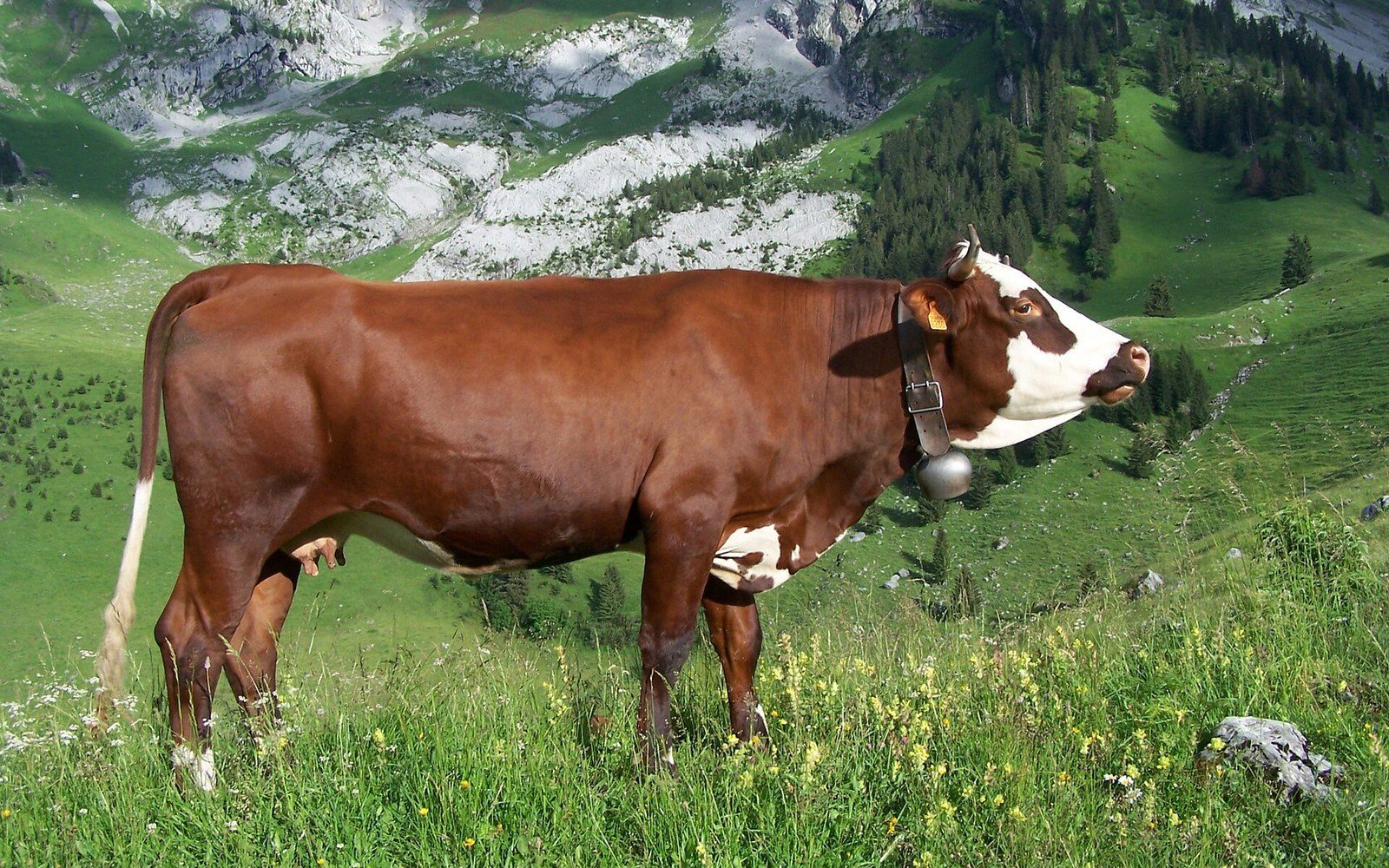
Abondance
Mountain breed · all three designations
Mahogany and white, named for its valley, and once the overwhelming majority on these pastures. First by first inseminations in the Bauges at 29 per cent.
Photo: Abondance cow profile · Wikimedia Commons
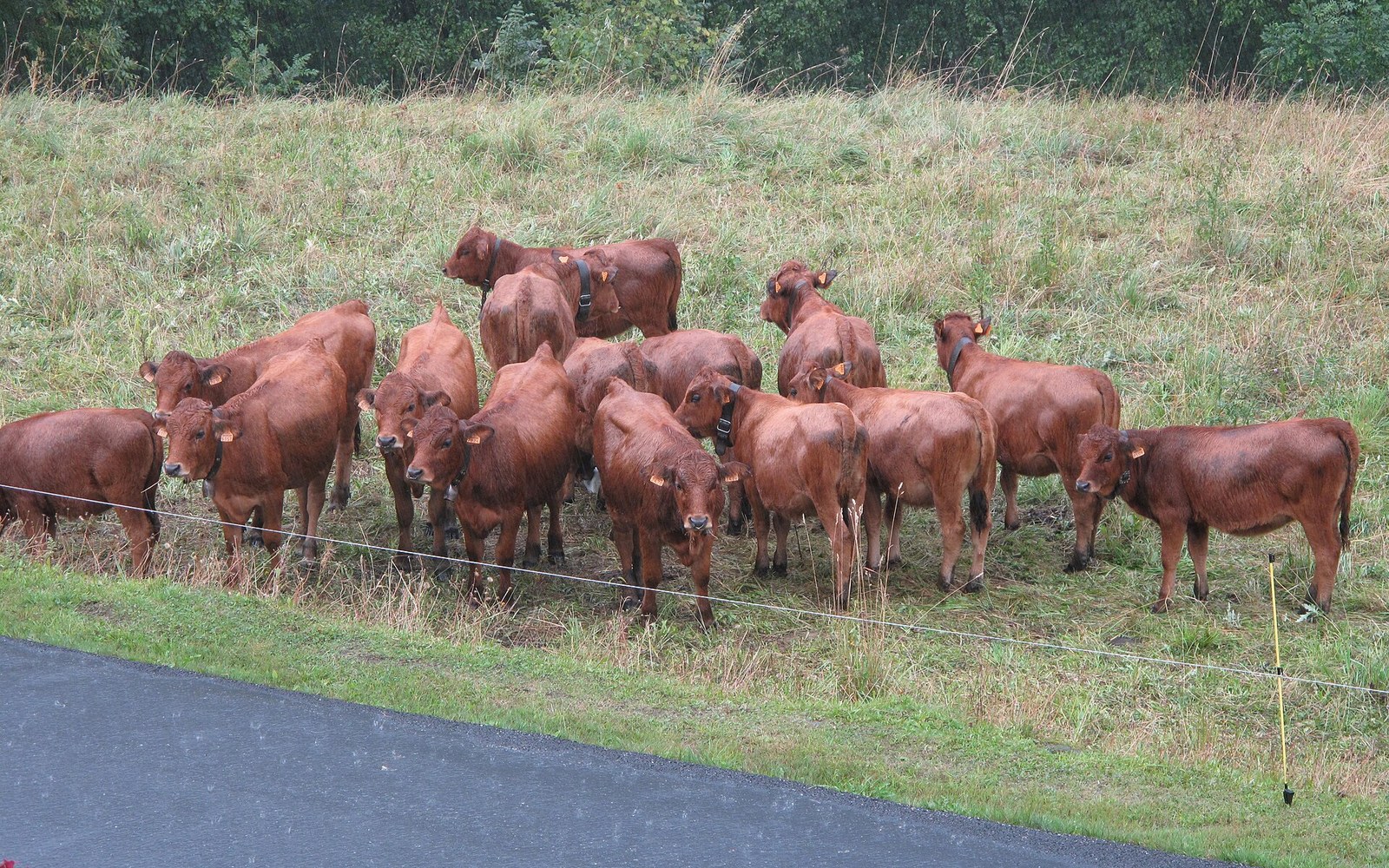
Tarine
Mountain breed · all three designations
Also called Tarentaise. Small, dark-coated and sure-footed, and the breed that takes the broken ground above Chevaline and Seythenex without fuss. Second by first inseminations at 26 per cent.
Photo: Tarentaise cattle from Azureva · Wikimedia Commons
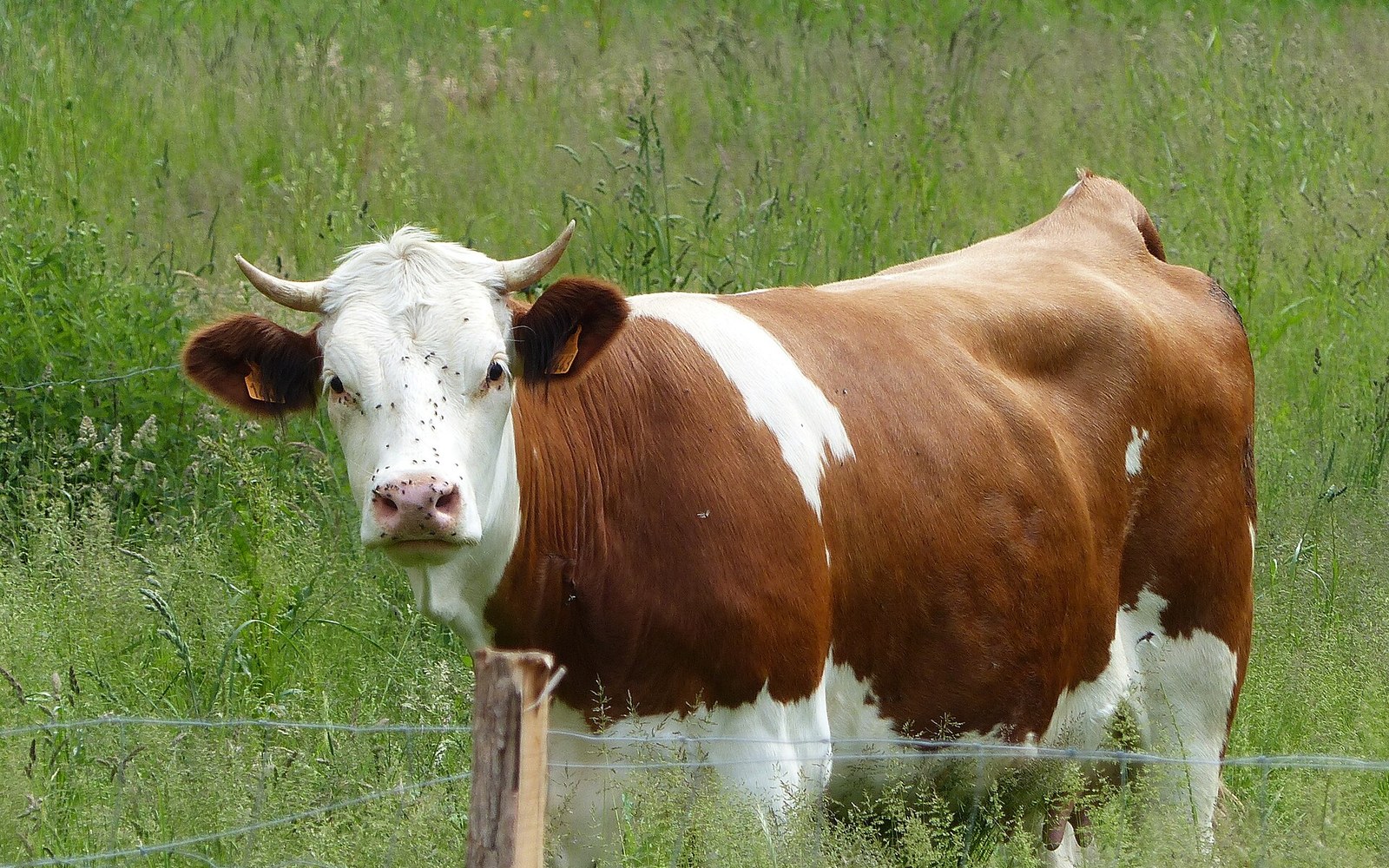
Montbéliarde
Jura breed · all three designations
Red-and-white and higher yielding, admitted alongside the two mountain breeds. For Tome des Bauges the herd must still be at least half Tarine and Abondance.
Photo: Montbéliarde du Morbihan · Wikimedia Commons