The casein tag as a chain of custody
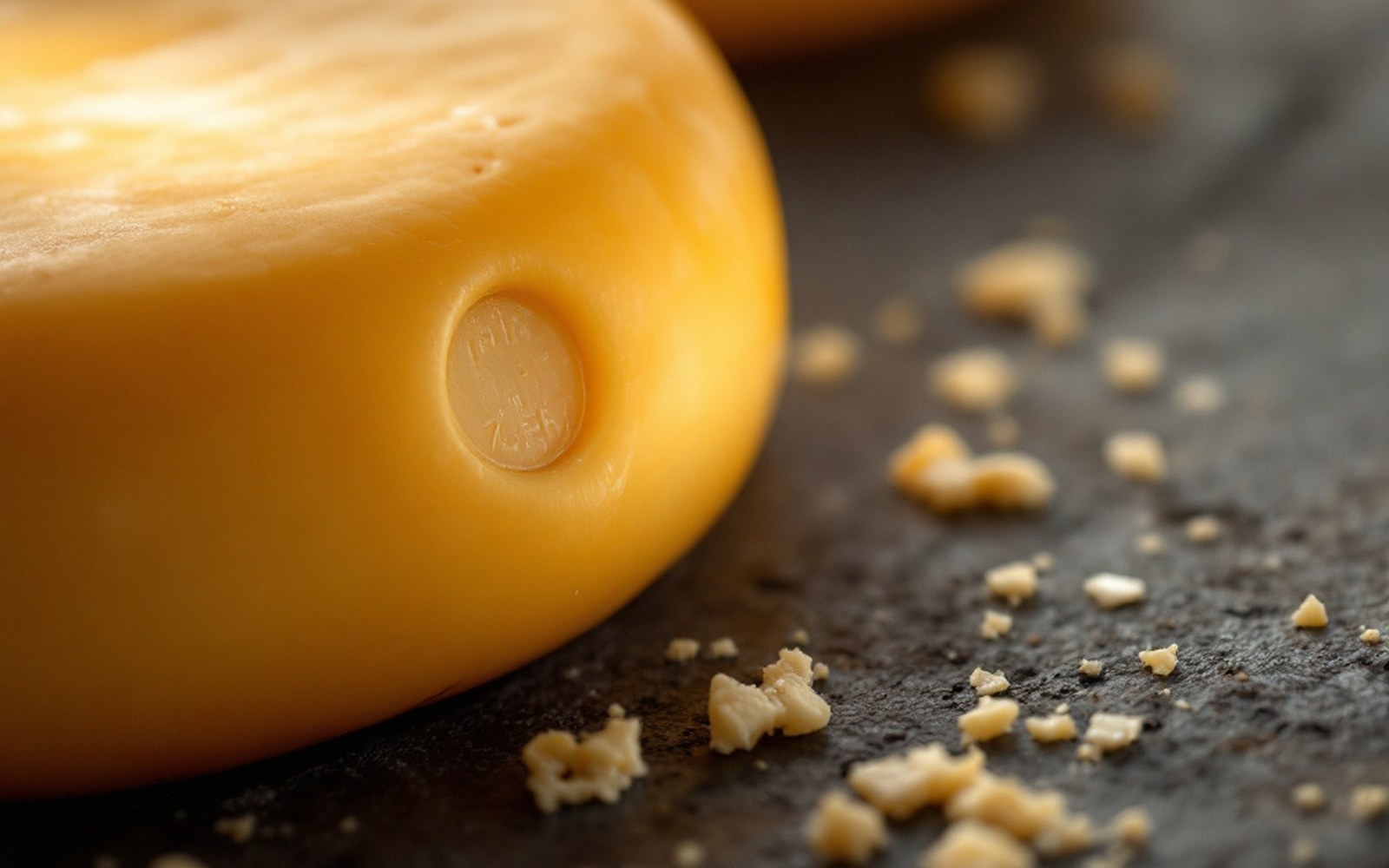
Every wheel of Reblochon de Savoie carries a small disc pressed into one face before the cheese is even pressed: a casein plate, coloured by category and laser-etched or stamped with a code that tells an inspector — or a customs officer, or a technician at the cooperative — exactly where and when that particular wheel was made.
Casein, the dominant protein in milk, can be formed into rigid, food-safe markers that bond to the rind as the cheese matures. The plate is applied to the curd in the mould, so it is not stuck on afterwards but fixed at the moment of making. It becomes structurally part of the wheel.
What the markings mean
- Green casein platefermier (farm-made) Reblochon, produced where the cows are milked
- Red casein platelaitier Reblochon, made at a cooperative dairy from pooled milk
- Etched codeidentifies the specific producer or dairy, traceable through the syndicat's register
- Caseinmilk protein; used because it bonds to the curd in the mould and survives ageing intact
The colour carries the first piece of information. For Reblochon, a green plate signals fermier production — cheese made on the farm where the milk was collected, by the farmer — while a red plate indicates laitier production, milk pooled at a cooperative dairy and processed away from the farm. The distinction is written into the cahier des charges, the specification document that the Institut national de l'origine et de la qualité ↗ holds for every French AOP.
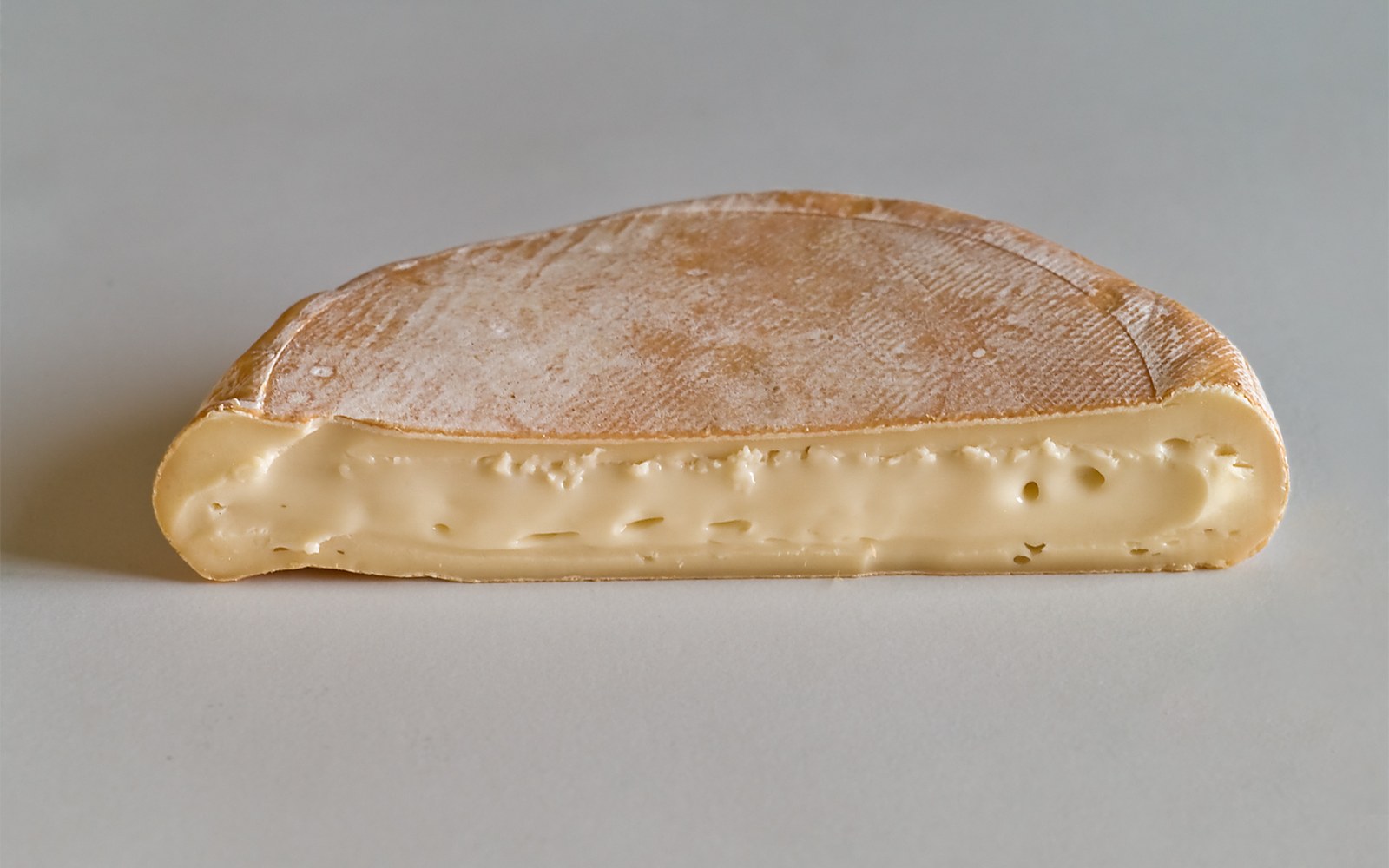
The code etched into the plate adds the second layer: an identification number traceable to a specific producer or dairy, cross-referenced against the AOP register. For Reblochon that register sits with the Syndicat Interprofessionnel du Reblochon, and for both Reblochon and Tome des Bauges the broader European framework of protected designations is maintained in the eAmbrosia database ↗ by the European Commission.
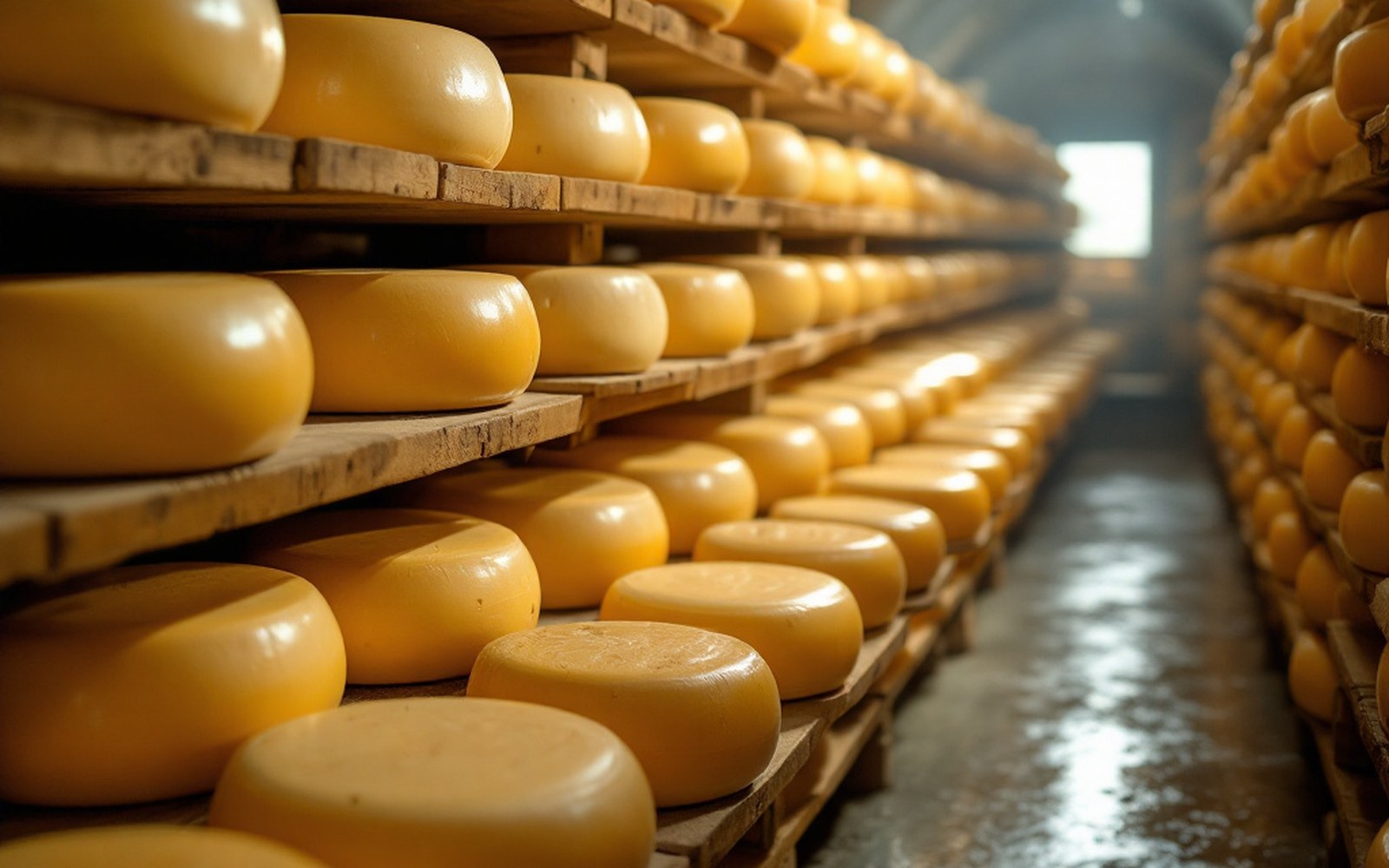
The plate survives the affinage — the weeks of turning and cellar time — intact.
The plate survives the affinage — the weeks of turning and cellar time — intact. That durability is the point. A wheel can be moved between producers, transported across a border, or rested in a specialist cellar without any label to fall off or any ink to smudge. The casein disc carries the record through the rind until the cheese reaches a table.
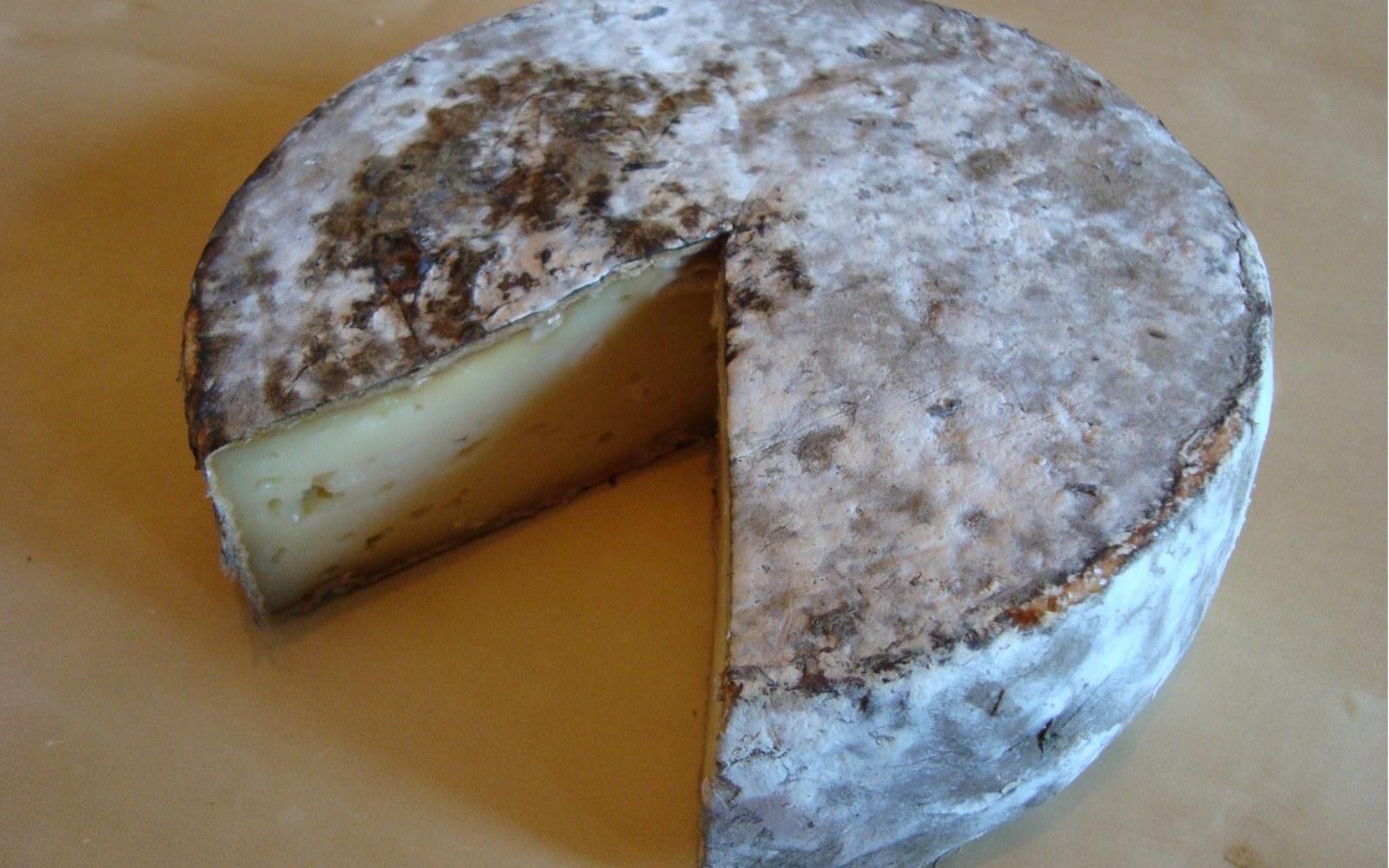
It is a small object, easy to miss if you are not looking. But it is also how a protected designation holds together across every alpage, every cooperative vat and every kilometre of road between the massif and the market.